
Most product research dies in a spreadsheet. You scroll Amazon, copy a few listings, glance at TikTok, and call it a day. The signal that actually matters, which products are climbing right now, never shows up in a single snapshot. So I stopped doing it by hand. I built an n8n web scraping workflow wired to Octoparse MCP that scrapes Amazon Best Sellers every day, flags the products gaining rank, and validates them on TikTok. This is the full build, the real results, and every place it broke.
This is the automated version of the manual method in our guide on how to find winning products. If you want the theory first, start there. If you want the system, keep reading.
What this workflow is for
This workflow is a dropshipping automation that answers one question on a schedule: which products in my niche are gaining demand faster than the competition can react?
It runs on its own each morning. It captures the full Amazon Best Sellers ranking for a category, compares today against the previous days, and writes out the products that climbed three days in a row. Then it checks whether social attention is driving that climb, and whether the category still has room for a new seller. You get a short list of data-backed candidates instead of a hunch.
It is built for dropshippers and small e-commerce sellers who do not want to pay for a closed “winning products” tool and would rather own the raw data.
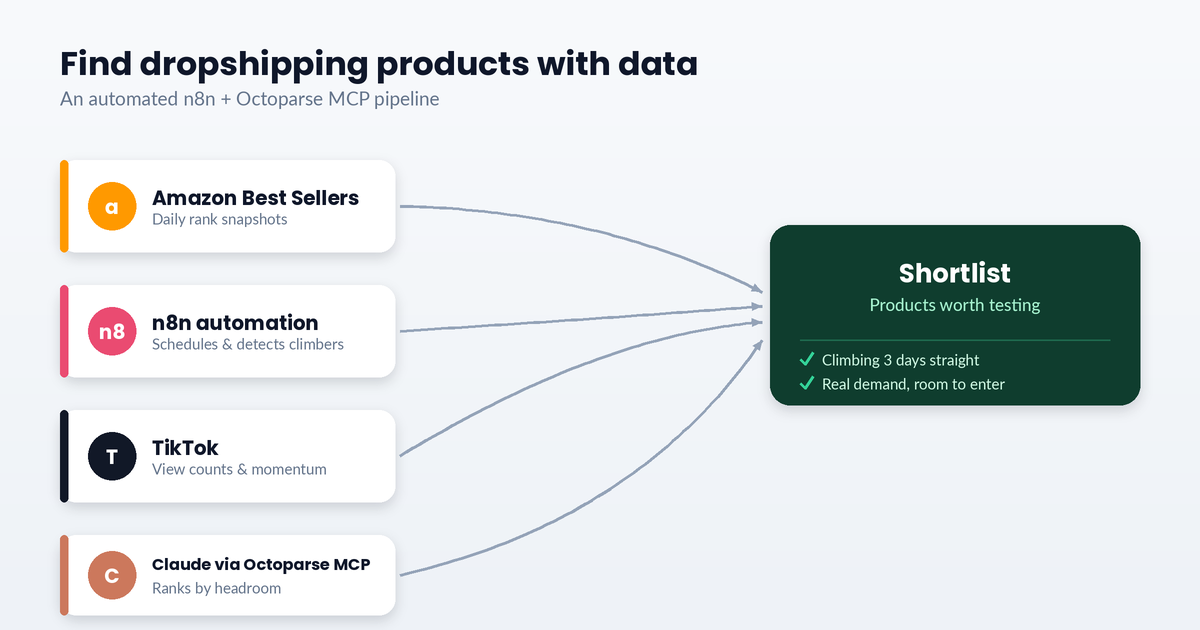
The whole workflow at a glance
Here is the entire pipeline before we build any of it. Five stages, each handing data to the next.
| Stage | Tool | What it does |
| 1. Capture | Octoparse Amazon Best Sellers Scraper | Pulls the day’s top 100 for a category (rank, title, price, URL) |
| 2. Track | n8n scheduled workflow + Google Sheets | Appends a dated snapshot, then detects products climbing 3 days straight |
| 3. Validate | Octoparse TikTok scrapers | Checks view counts, dates, and creator spread for the climbing category |
| 4. Qualify | Octoparse Amazon Product Scraper | Pulls review counts to measure how saturated each climber is |
| 5. Analyze | Claude via Octoparse MCP | Reads the sheets in plain language and ranks the candidates |
The engine is n8n, a no-code automation tool. Think of it as plumbing for data: each node does one job and passes the result to the next. Octoparse handles the actual scraping, because Amazon and TikTok both block naive scrapers, and Octoparse runs the extractions in the cloud on a schedule with proxies handled for you.
The result: what one week actually surfaced
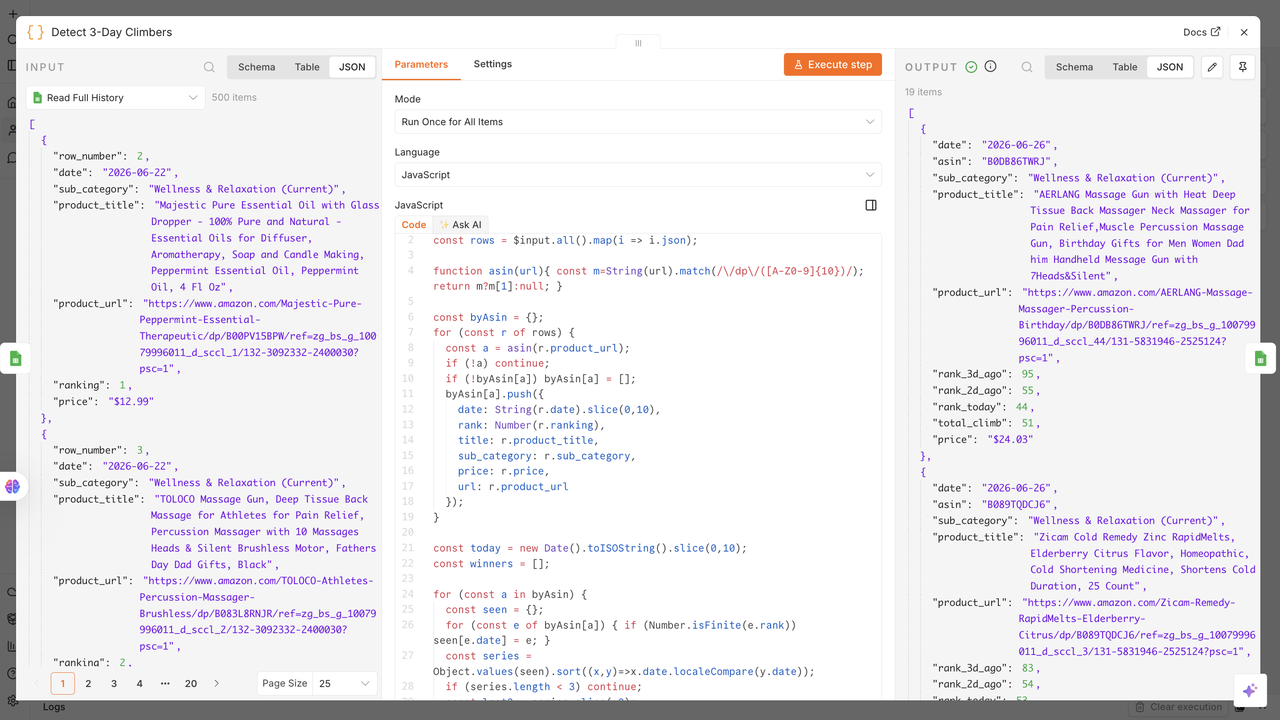
I pointed the workflow at a single Amazon category, Wellness and Relaxation, and let it capture the top 100 every day for a week. Comparing snapshots by product, it flagged 19 products that climbed three days in a row.
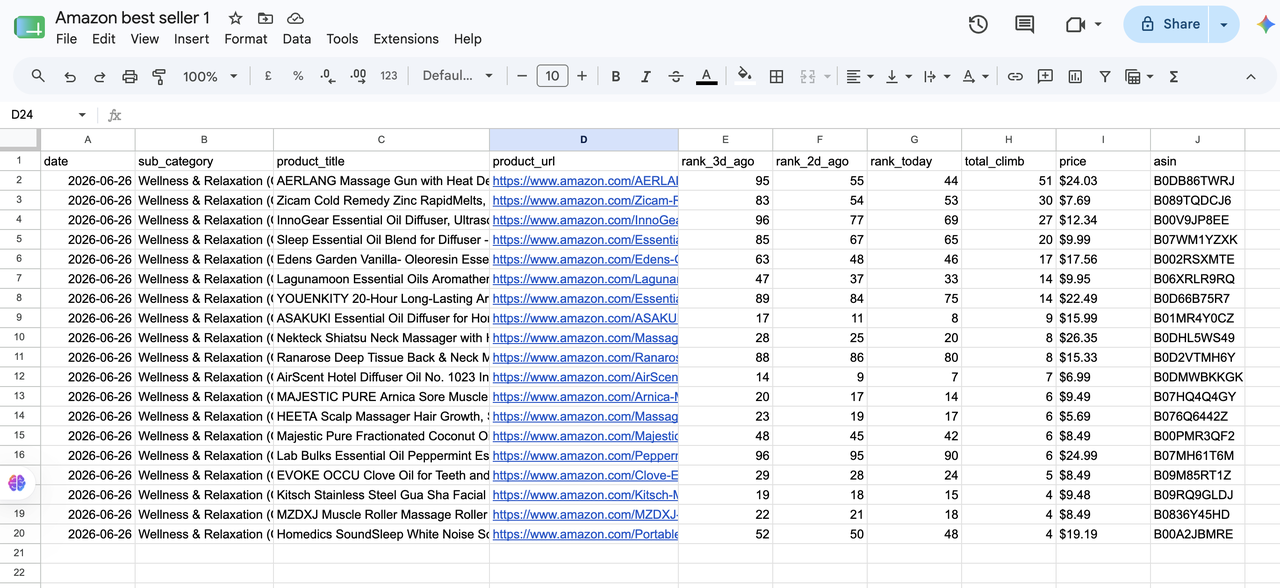
The biggest mover was a massage gun that jumped from rank 95 to 44 in three days, priced at $24.03. A zinc cold remedy climbed 30 spots. A diffuser climbed 27.
Then the validation stages changed the story. Here is the part a single snapshot would never tell you.
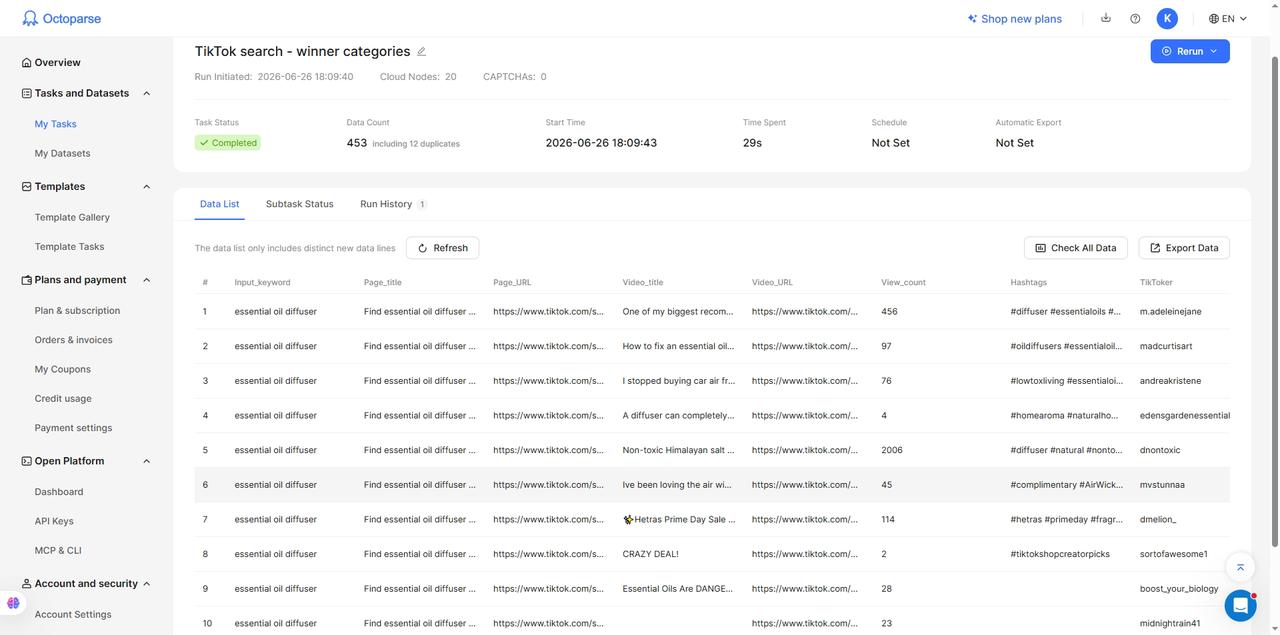
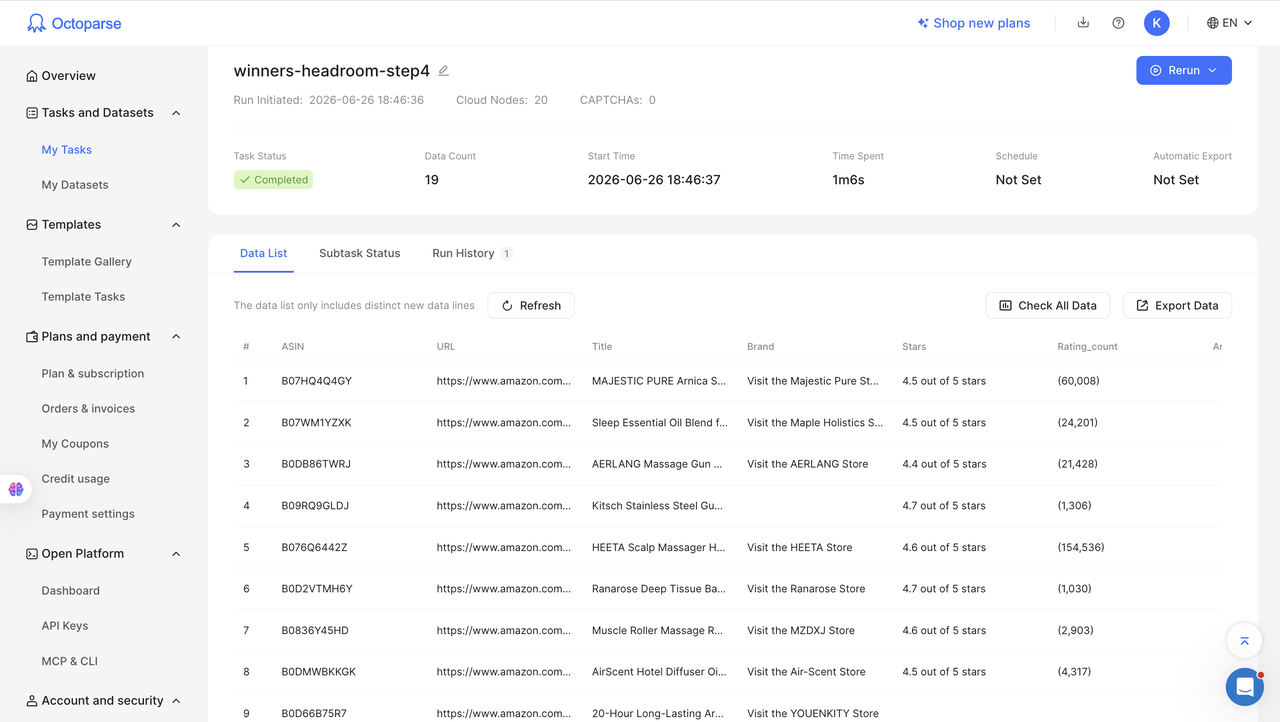
| Finding | What the data showed |
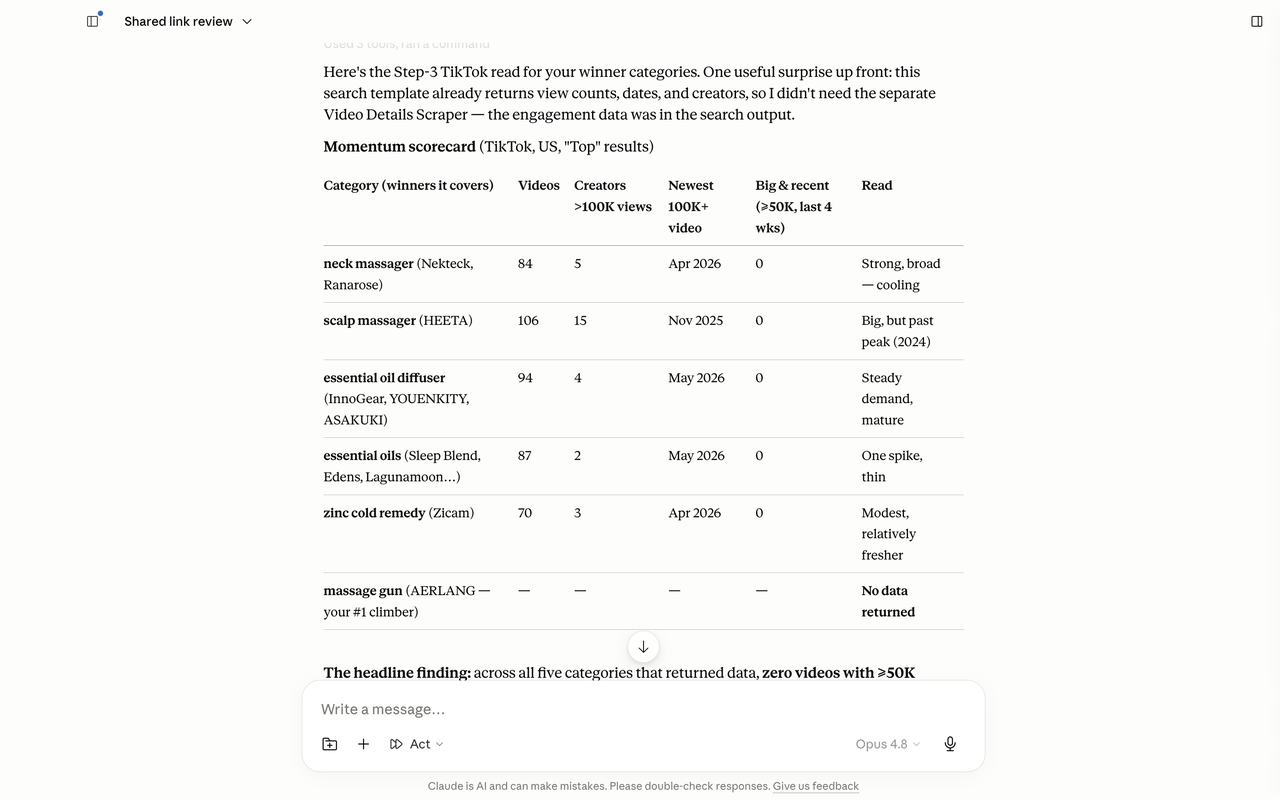
| TikTok momentum | Across roughly 453 videos in the climbing categories, zero high-view videos were posted in the last four weeks. The big numbers were months or years old. |
| Read on the trend | These were not fresh viral trends. They were seasonal spikes (mid-June recovery and gifting), which is a very different bet. |
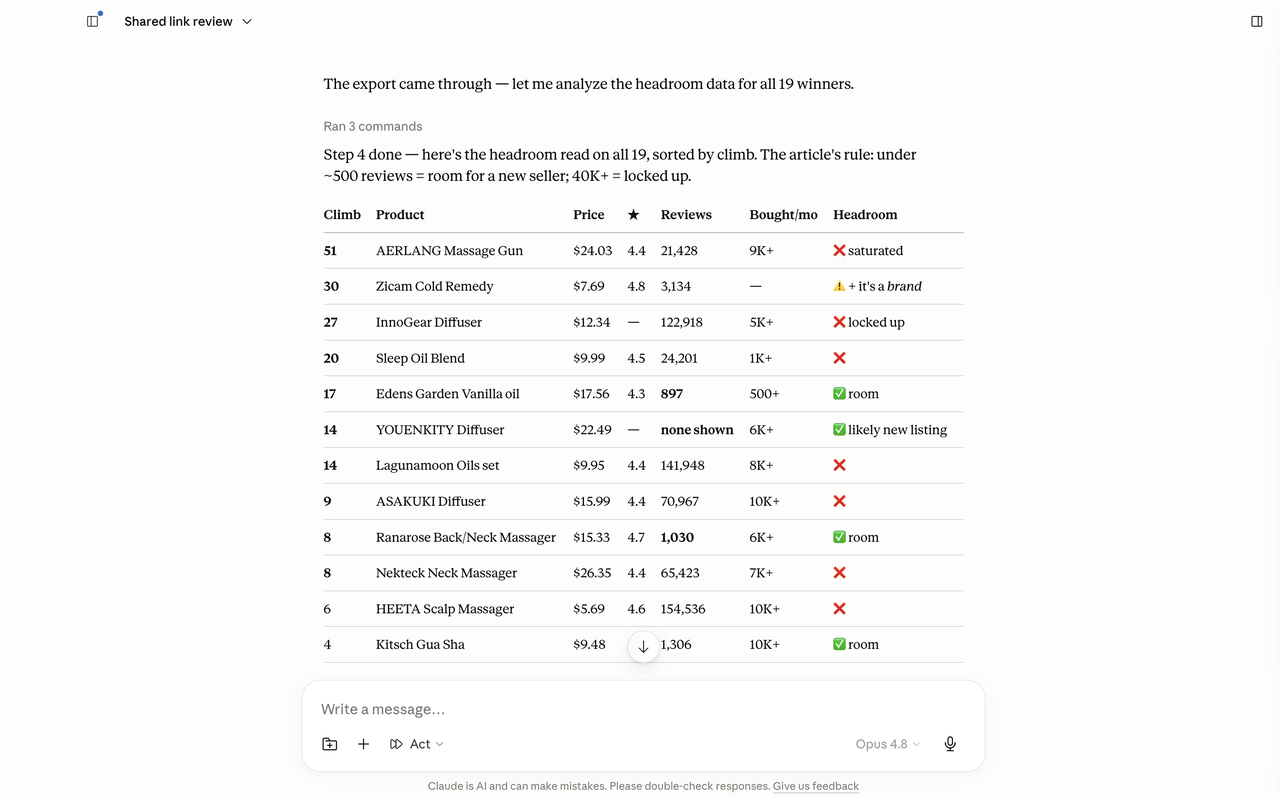
| Headroom | Zero of the 19 climbers had under 500 reviews. The biggest climbers were the most saturated: the massage gun had over 21,000 reviews, one diffuser had over 122,000. |
| The shortlist | The realistic entries were the smaller climbers with light review counts: a neck and back massager with about 1,030 reviews and strong recent sales, a diffuser with no review count yet (a likely new listing), and a vanilla diffuser oil with 897 reviews. |
The takeaway: the loudest climbers were the worst bets, and the workflow caught that before I spent a dollar. That is the whole point of automating it. Now here is how to build the same thing.
The stack you need
You need three things, and the free tiers cover this entire workflow.
n8n is a no-code workflow automation tool. You connect nodes on a canvas, set a schedule, and it runs unattended. It is the orchestrator.
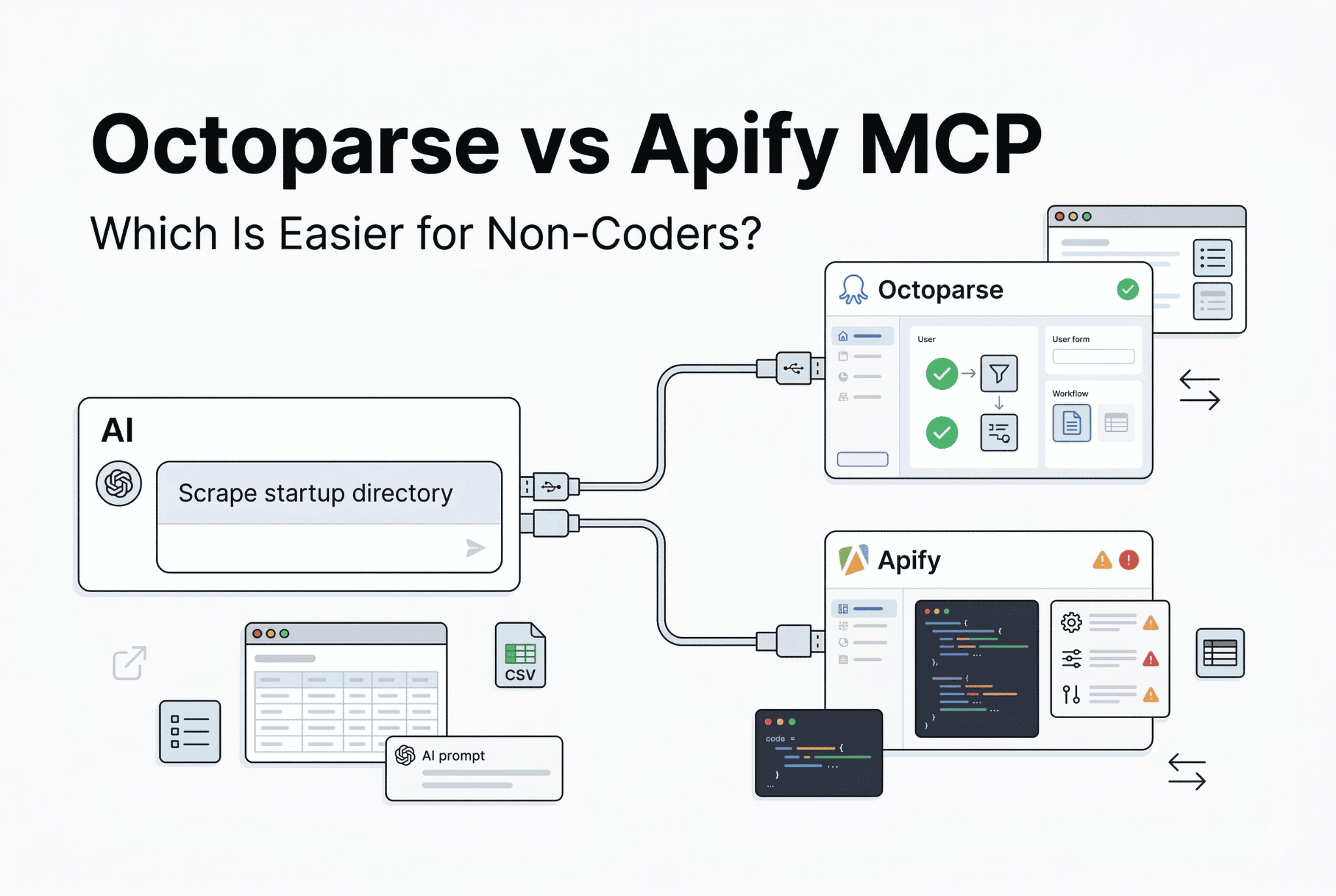
Octoparse MCP is the bridge that lets an AI assistant and an automation tool drive Octoparse’s scrapers directly. MCP, the Model Context Protocol, is a standard that lets tools like Octoparse expose their actions to assistants like Claude. In practice it means you can launch a scrape from inside a chat or a workflow instead of clicking through a UI. The setup lives in the MCP docs.
A Google Sheet stores the daily history. Two tabs: one raw history, one for the detected winners.
Octoparse’s free and Basic accounts get 2,000 records per week through MCP at no extra cost. That is far more than this loop needs.
Steps on how to find products to sell on Amazon
Step 1. Scrape Amazon Best Sellers with Octoparse
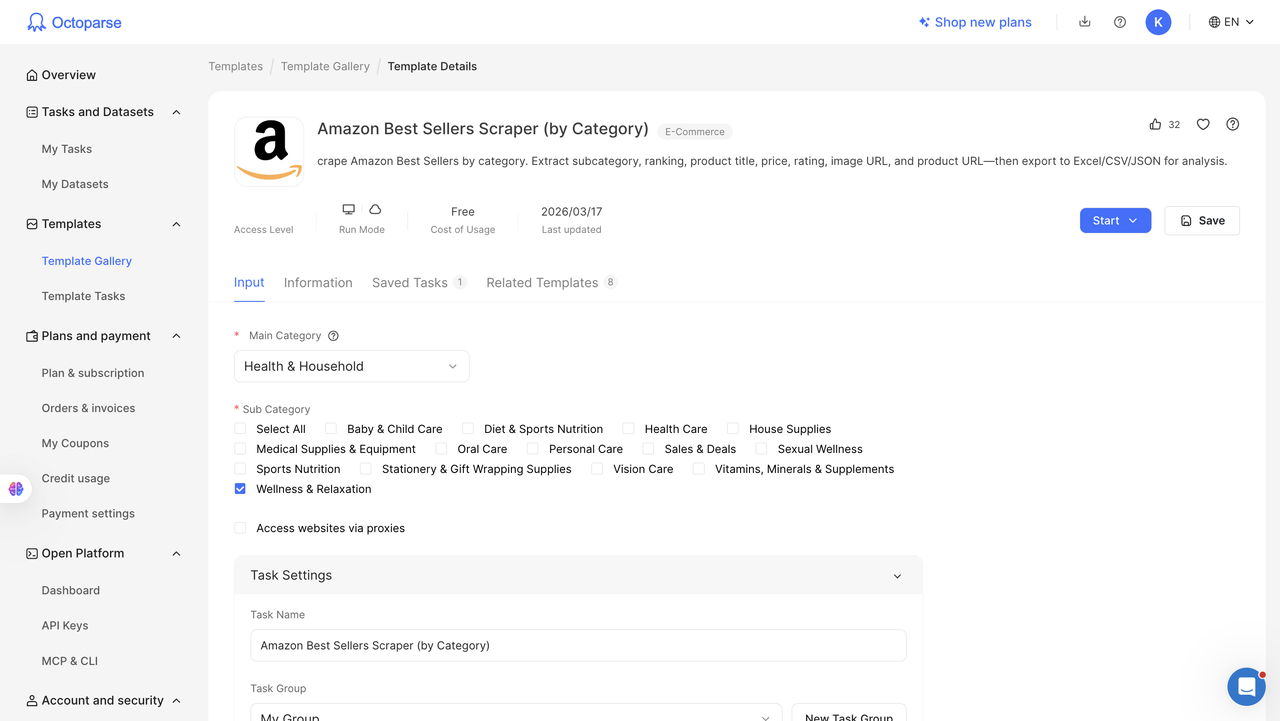
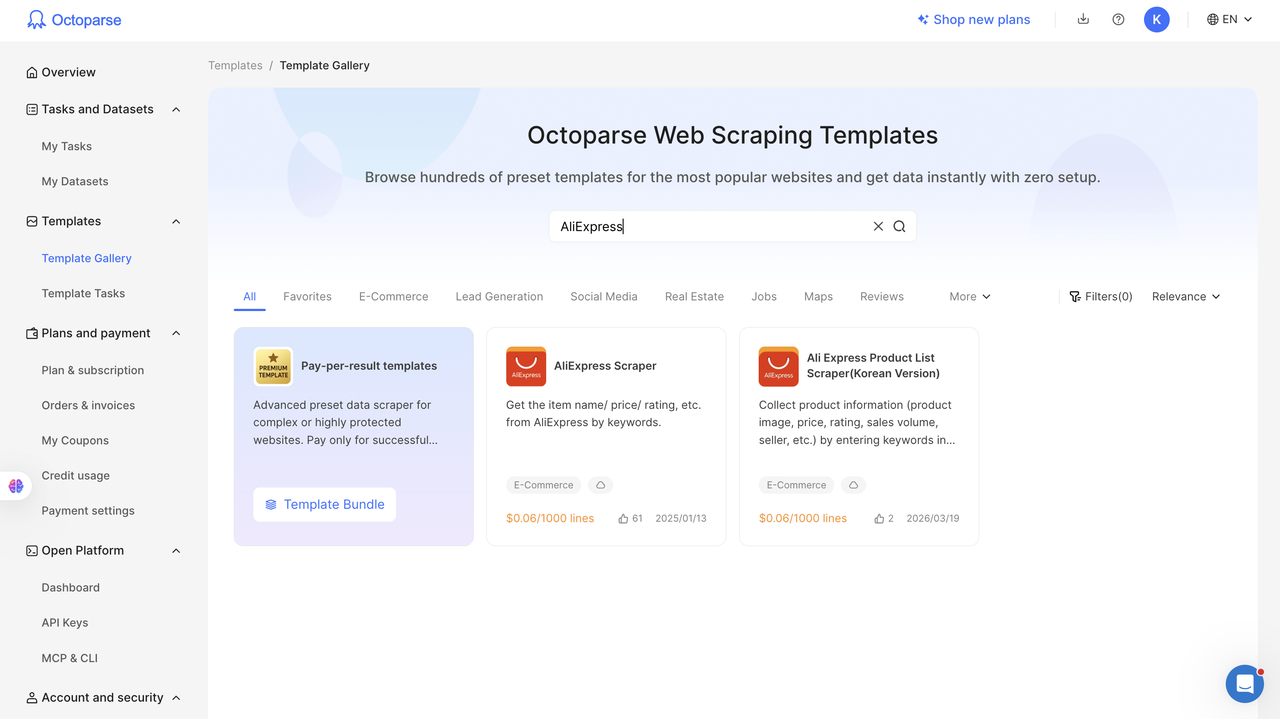
The data foundation is a daily snapshot of a category’s Best Sellers. Doing this by hand is hopeless, so I used the Amazon Best Sellers Scraper, a prebuilt cloud template.
You pick a main category, then the subcategories you want to track. The Amazon Best Sellers Scraper returns, for every ranked product: subcategory, rank position, title, price, rating, and product URL. One run is one dated snapshot of the whole top 100.
https://www.octoparse.com/template/amazon-best-sellers-scraper-by-category
This is the amazon best sellers scraper doing the boring part well: a complete, structured ranking in one export, ready for a sheet.
Step 2. Schedule it in n8n and track rank movement
A snapshot proves nothing. The signal is the change between snapshots, so this is where n8n turns a scraper into an amazon best seller rank tracker.
The workflow runs on a daily schedule trigger. It calls Octoparse to pull today’s data, tags every row with the date, and appends it to the history sheet. Then it reads the full history, compares the last three days, and writes out any product whose rank improved three days running.
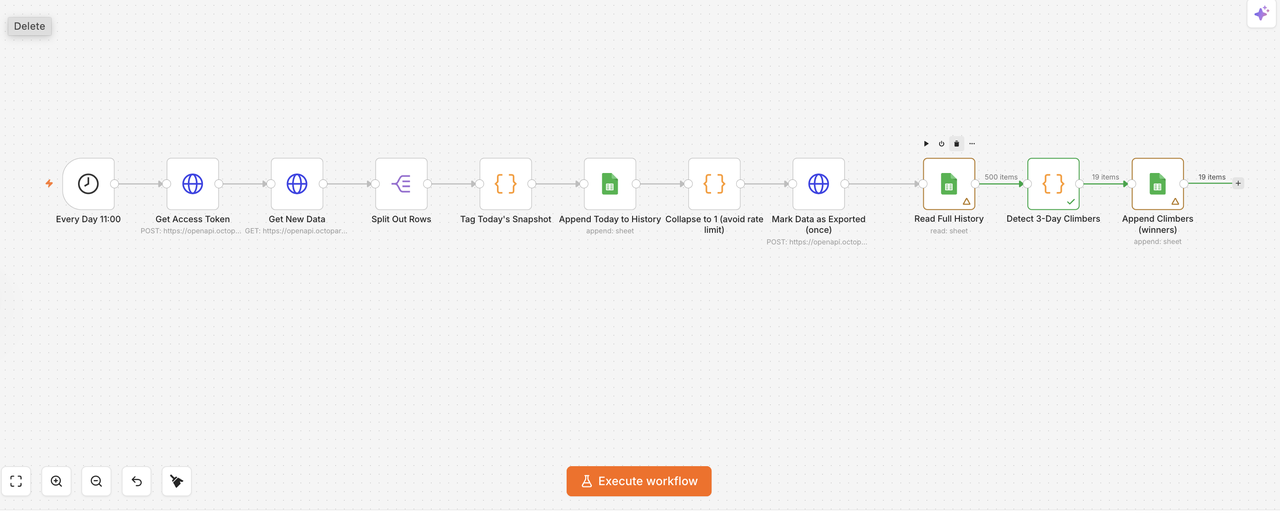
This step is also where I hit the bug that quietly breaks most homemade trackers. My first version matched products across days using the product URL. It found zero climbers, every single day.
The reason: Amazon’s Best Sellers URLs carry the rank position and a session code that change on every scrape. The same product looks like a brand new link each day, so nothing ever appears to climb. The fix is to match on the ASIN, the fixed ten-character ID right after /dp/ in the URL. Pull the ASIN with a small expression, group by that, and the climbers appear. With that one change, the empty sheet filled with 19 products.
Step 3. Validate momentum by scraping TikTok
A climbing rank tells you demand is rising. It does not tell you whether the rise has room to run. For that, I scrape TikTok.
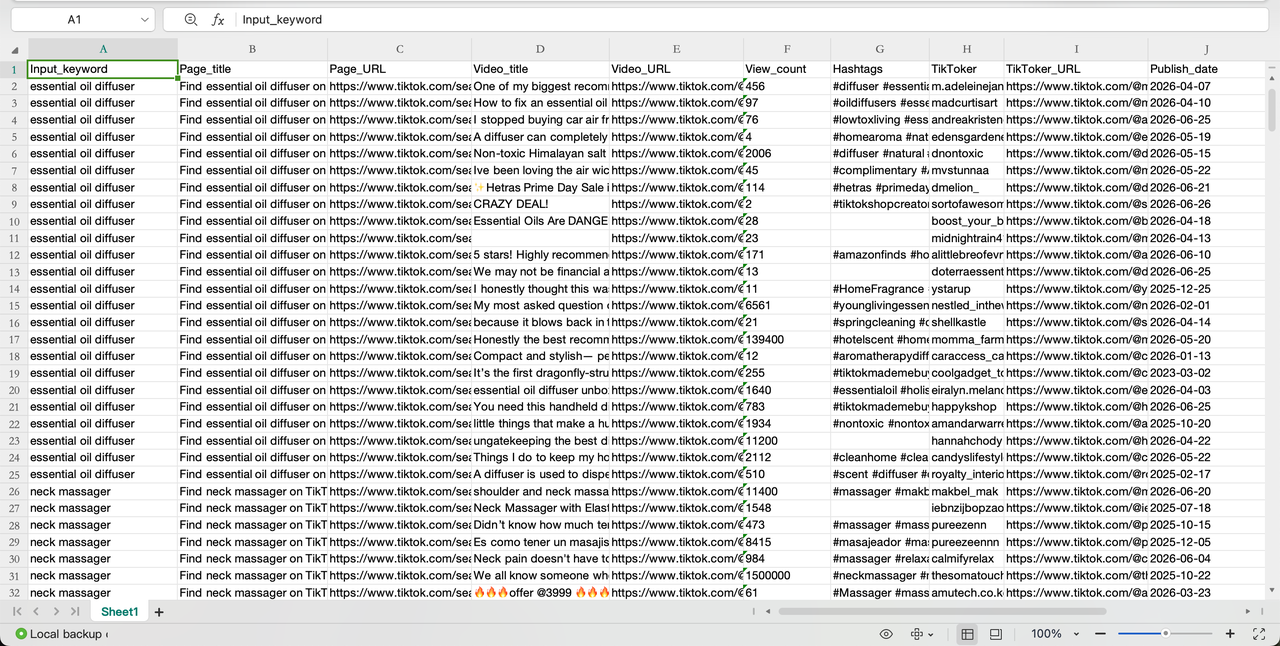
The method is two templates. First the TikTok Search Scraper pulls videos for the category keyword. It already returns view counts, hashtags, post dates, and creators, so for a quick read you often do not even need a second pass. When you want full engagement detail, the TikTok Video Details Scraper adds likes and comments per video.
https://www.octoparse.com/template/tiktok-video-url-scraper
Two things matter when you scrape TikTok for this: how recent the high-view videos are, and how many different creators are pulling big numbers. Twenty creators each hitting six figures is a trend. One old viral video is a fluke.
One honest lesson from my run: searching a brand name returns almost nothing, and searching “massage gun” returned mostly seller spam. Search the category keyword or its hashtag, not the product name.
Step 4. Check headroom before you commit
A product with demand and momentum can still be a trap if the category is saturated. The headroom check is cheap because you already have the ASINs.
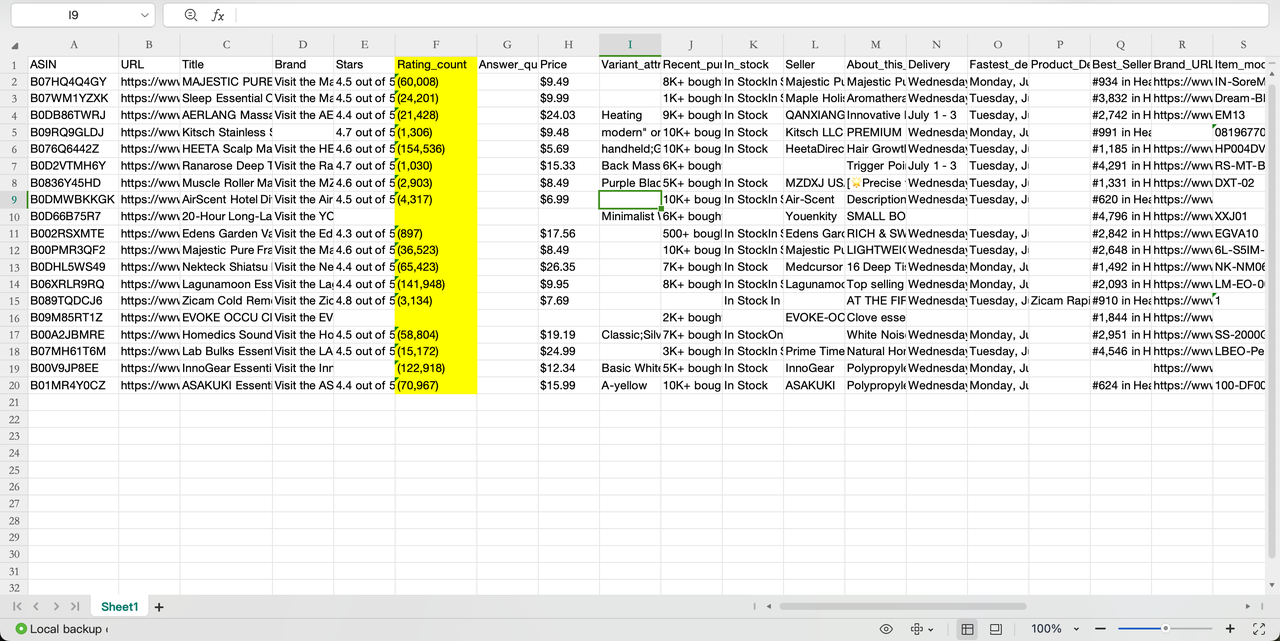
The Amazon Product Scraper pulls review counts, star ratings, and recent purchase volume for each climber. The rule of thumb: a climbing product with under roughly 500 reviews leaves room for a new seller. One sitting at the top with 40,000 reviews does not. This is the amazon product research step that separates “popular” from “winnable”.
In my run it was decisive. Every one of the 19 climbers had more than 500 reviews, and the biggest movers were the most entrenched. The few realistic candidates were the quieter climbers with light review counts.
Step 5. Run the whole loop from Claude with Octoparse MCP
The final upgrade turns the workflow into a conversation. Because Octoparse ships an MCP server, I can drive every extraction from inside Claude. This is the n8n mcp idea taken one step further: the automation runs the daily collection, and the AI does the thinking on top of it.
In practice, ai product research here looks like asking Claude to pull this week’s climbers, scrape TikTok for those categories, fetch review counts, and rank the candidates by headroom. The assistant runs the Octoparse scrapers through MCP, reads the sheets, and hands back a short list. I make the call on what to test.
Octoparse’s MCP server works with Claude, ChatGPT, Cursor, and other MCP clients. Free and Basic accounts include 2,000 records per week through it.
What to do with the shortlist: source the type, not the brand
The shortlist is not a buy-these-exact-items list. The Best Sellers ranking is a demand sensor at the product-type level. The branded winner is your proof of concept and your spec sheet, not your inventory. You do not resell the Nekteck or the AERLANG. You read them.
Here is what is actually actionable.
Source the product type, not the product. “Shiatsu neck massager with heat is climbing” is the signal. You source a generic or white-label version of that type from a dropshipping supplier, not the branded listing. AliExpress and CJdropshipping carry the broadest global catalogs. Spocket, Zendrop, and DropCommerce focus on US and EU suppliers with faster shipping. For bulk or private-label orders, Alibaba and Faire connect you to manufacturers and wholesalers. The bestseller just proved people are buying that form factor right now.
Copy the winning spec and price band. The top listings hand you the configuration the market rewards and the price you have to land near. For the neck massagers that band was roughly $15 to $26. For the diffusers, a large-tank unit around $12 to $22. You match the spec, then run the margin math against supplier cost.
Let headroom decide which types are still open. A climbing type whose leaders have around 1,000 reviews still has room for a new listing. A type where every top product has 60,000 to 150,000 reviews is saturated as a category. Skip it even though it is “winning.”
Applied to this run:
| Candidate | What to do |
| Ranarose neck massager | Best pick. Source a generic shiatsu neck massager with heat, around $15 to $25. The type is rising, not review-locked, and had the broadest TikTok creator spread. |
| Diffusers and essential oils | Strong for private label. Both are cheap to brand with low minimums. The data tells you which format and scent is climbing. |
| Zicam | Skip. It is a trademarked OTC drug, so you cannot make a generic. That is a regulatory wall, not low headroom. |
| Anything with 15,000+ reviews | Skip. The type is mature, so even a generic enters a price war. |
The net: the four-step method does not hand a dropshipper a shopping list. It hands you a product category with proven demand, rising momentum, and room left, so you can source a generic and differentiate. The branded names are just how you read the signal.
What to do next
Best Sellers confirms demand. It cannot tell you supplier cost or whether you can source a good generic. That is the next step. Take the top candidate, search the product type on a supplier platform such as AliExpress, CJdropshipping, or Spocket, and compare the landed cost against the price band the winners sell at.
Get the n8n workflow (free template)
You can import the whole thing instead of rebuilding it node by node. I published a sanitized template with every credential and ID replaced by a placeholder.
- Download the template JSON from the link below.
- In n8n, open Workflows, then Import from File, and select the JSON.
- Connect your own Google Sheets credential on the three Sheets nodes.
- Fill the four placeholders:
YOUR_OCTOPARSE_USERNAME,YOUR_OCTOPARSE_PASSWORD,YOUR_OCTOPARSE_TASK_ID, andYOUR_GOOGLE_SHEET_ID. - Create a Google Sheet with two tabs named
historyandwinner, then activate the workflow.
Get the template: best-sellers-tracker.n8n.template.json.
One safety note. The template signs in to the Octoparse API with a username and password inside an HTTP node to keep the setup simple. For anything beyond a personal test, store those in an n8n credential instead of hardcoding them.
What this unlocks
Run this for a month and you own something no “winning products” subscription sells you: a private rank-movement history for your exact niche. The collection happens on Octoparse’s cloud on your schedule, with your computer off. Start now and in four weeks you can see not just what is selling, but what is accelerating, with the social and competition context attached.
You also stop paying the trend tax. By the time a product hits a public list, the margin is gone. A tracker that watches rank deltas catches the move while it is still early.
Where Octoparse fits in this workflow
This whole build leans on Octoparse for the parts that are genuinely hard: scraping sites that fight back, on a schedule, without code. Here is where it earns its place.
Capturing a full category every day without getting blocked
Amazon throttles and blocks repeat scrapers fast. The cloud templates in the template library run the extraction on Octoparse’s servers with proxies and retries handled, so a daily Best Sellers pull just works instead of breaking by week two.
Pulling TikTok data that lives inside an app
TikTok view counts are not in a tidy API. Octoparse’s social templates return them as structured rows, which is what makes the momentum check possible at all.
Driving the research from your AI assistant
The MCP server lets Claude or ChatGPT launch these scrapes and read the results in plain language, so the loop becomes a conversation instead of a dashboard.
If you are still choosing a category to track, our guide to the best dropshipping niches is a good starting point.
FAQ
Can n8n scrape Amazon on its own?
Not reliably. n8n is an automation orchestrator, not a scraper, and Amazon blocks naive requests quickly. The durable pattern is to let n8n handle scheduling and logic while a cloud scraper like Octoparse does the actual extraction with proxies and retries. n8n then stores and compares the results.
Is n8n web scraping free?
n8n offers a free self-hosted option, and Octoparse’s free plan covers 50,000 rows per month plus 2,000 records per week through MCP. For a single-category daily tracker like this one, you can run the entire workflow without paying for either tool.
What is Octoparse MCP?
Octoparse MCP is an implementation of the Model Context Protocol that lets AI assistants and automation tools trigger Octoparse scrapers directly. Instead of clicking through a dashboard, you ask Claude or ChatGPT to run an extraction, and it launches the task and reads the results. Setup is in the Octoparse MCP docs.
How do I automate dropshipping product research?
Capture a marketplace’s Best Sellers ranking on a daily schedule, store each dated snapshot, and compare them to find products climbing the ranks. Then validate momentum on social and check competition with review counts. A scheduled Octoparse scrape feeding an n8n workflow does all of this unattended.
Can AI find dropshipping products for me?
AI can run the heavy lifting: pulling rankings, comparing snapshots, scraping social signals, and ranking candidates by headroom. Through Octoparse’s MCP server, assistants like Claude can launch those scrapes directly. The final judgment on margin, supplier quality, and brand fit still belongs to you.
Why match on ASIN instead of the product URL?
Amazon Best Sellers URLs include the rank position and a session code that change on every scrape, so the same product looks like a new link each day. Matching on the URL makes nothing appear to climb. The ASIN, the ten-character ID after /dp/, is stable, so it is the correct key for tracking rank movement over time.