

Is Walmart cheaper than Target? Yes, at everyday, non-promotional prices, Walmart is usually cheaper than Target, especially on groceries, household staples, and Walmart’s Great Value store brand. That gap narrows fast once Target’s Circle discount and store-brand picks come into play, and it can flip in Target’s favor on the right item.
To find out for sure rather than guess from a handful of receipts, we scraped 70+ real prices across 34 matched products (groceries, household staples, and health & beauty items) at Walmart and Target. The breakdown below shows exactly where each store wins. Later in this article, we walk through the exact tools, including the free and paid templates on Octoparse we used, in case you want to replicate this tracking yourself or run it for a business use case.
📝 Research Transparency: This price comparison is based on data collected between September 17 and September 21, 2026, using automated web scraping of publicly available prices on Walmart.com and Target.com at each site’s default online listing (not pinned to one fixed ZIP code or region throughout). Prices reflect online listings and may differ from in-store pricing. This analysis is independent and unsponsored. See our full methodology later in this article.
Quick Answer: Which Store Actually Wins on Price?
Walmart. Across 34 matched products, the same basket cost $167.76 at Walmart and $182.66 at Target, about 8.2% less. Walmart came out cheaper in all three categories we tested (groceries, household essentials, and personal care), with the biggest gaps on groceries and personal care and household items nearly tied. Target can win when Target Circle discounts stack on top of a sale price. The category snapshot and full breakdown follow below.
Where Each Store Tends to Win
| Category | Typically Cheaper | Why |
| Groceries & pantry staples | Walmart | Everyday-low-price model and lower-priced Great Value alternatives |
| Store-brand food | Walmart | Largest consistent savings tend to be on generic items. See the store-brand comparison below |
| Household basics | Walmart | Often lower base prices on paper goods and cleaning supplies |
| National-brand groceries | Usually Walmart, but close | The difference is frequently just pennies to a few dollars per cart |
| Circle/RedCard-discounted items | Can flip to Target | A stacked 5% discount plus a sale price can undercut Walmart’s shelf price. See the Circle discount section below |
Full Results From Our Walmart vs. Target Price Comparison
Before the numbers, here is what we compared and how. We picked 34 everyday products (groceries, household staples, and health & beauty items) that could be matched across both stores, scraped each product’s listed price from Walmart.com and Target.com with Octoparse, and converted to a per-unit price wherever the package sizes weren’t identical. The results below start with total cost by category, then zoom in on store-brand products, then look at how Target Circle and Target’s price-match policy can change the outcome. The collection window and limitations are noted right after.
Methodology Note
All prices were collected between September 17 and September 21, 2026, using automated web scraping via Octoparse. Prices represent online listings using each site’s default location detection rather than one fixed, verified ZIP code held constant across every pass, so treat this as a general online-pricing snapshot rather than a hyper-local one. See the methodology section below for details.
Important Disclaimers
- Temporal Limitation: Prices fluctuate daily, and your local or in-store prices may differ, so treat these numbers as a guide rather than a current quote.
- Product Matching: We compared identical brands and sizes where possible. Store-brand equivalents were matched by closest comparable product.
- Data Source: All prices are publicly available on Walmart.com and Target.com. This analysis is for educational and consumer information purposes only.
- No Endorsement: This comparison is independent. Neither Walmart nor Target sponsored this research.
Total Cost Comparison
The numbers below come from a live price comparison we ran using Octoparse’s Walmart Data Extractor and Target Product Details Scraper templates, the same tools you can use to replicate or extend this comparison yourself (see the collection method later in this article).
https://www.octoparse.com/template/walmart-data-extractor
https://www.octoparse.com/template/target-product-scraper
Total Cost by Category: Walmart vs. Target (34 Matched Products)
| Shopping Category | # of Items Compared | Walmart Total | Target Total | Winner | Average Savings | Data Collection Period |
| Groceries & Pantry | 20 | $47.58 | $56.80 | Walmart | 16.2% | Sep 17-21, 2026 |
| Household Essentials | 10 | $105.02 | $106.20 | Walmart | 1.1% | Sep 17-21, 2026 |
| Personal Care & Health | 4 | $15.16 | $19.66 | Walmart | 22.9% | Sep 17-21, 2026 |
| TOTAL | 34 | $167.76 | $182.66 | Walmart | 8.2% | Sep 17-21, 2026 |
Great Value vs. Good & Gather: Store-Brand Price Comparison
Both retailers push their own store brand hard: Walmart’s Great Value and Target’s Good & Gather (grocery). We compared 34 matched store-brand products below.
Store-Brand Price Snapshot
| Product | Great Value (Walmart) | Good & Gather (Target) | Winner |
| 1 gal milk (Walmart: Whole; Target: 2% Reduced Fat, closest in-stock match) | $3.02 | $3.69 | Walmart |
| Creamy peanut butter, 16 oz (exact size match) | $1.98 | $1.99 | Walmart (by $0.01) |
| Paper towels, 12 triple rolls (exact size match: Great Value Ultra Strong vs. up&up Make-A-Size) | $19.97 | $19.99 | Walmart (by $0.02) |
| Fresh banana, each (unbranded produce at both stores) | $0.20 | $0.39 | Walmart (nearly half the price) |
| Liquid laundry detergent, per-load price (sizes differ: Great Value 46 oz/32 loads vs. up&up 146 oz/93 loads) | $3.97 total = $0.12/load | $15.89 total = $0.17/load | Walmart (about 27% cheaper per load) |
| Large white eggs, 12ct (Walmart: regular, out of stock at capture but price shown; Target: cage-free, closest in-stock match) | $1.67 | $1.79 | Walmart (by $0.12) |
| All-purpose flour, 5 lb (exact size match) | $2.38 | $2.69 | Walmart (by $0.31) |
| Spaghetti, per-oz price (sizes differ: Great Value 16 oz vs. Good & Gather 32 oz) | $1.24 total = $0.078/oz | $2.39 total = $0.075/oz | Target (by about $0.003/oz, essentially tied) |
| 13-gallon drawstring trash bags, per-bag price (sizes differ: Great Value 20ct vs. up&up 25ct) | $4.06 total = $0.20/bag | $7.39 total = $0.30/bag | Walmart (about 31% cheaper per bag) |
| Long grain white rice, 32 oz (exact size match) | $1.77 | $2.29 | Walmart (by $0.52) |
| Shredded mild cheddar cheese, 8 oz (exact size match) | $1.97 | $2.19 | Walmart (by $0.22) |
| Frozen mixed vegetables, 12 oz (exact size match) | $0.98 | $0.99 | Walmart (by $0.01, essentially tied) |
| Tomato ketchup, 32 oz (exact size match) | $1.97 | $2.59 | Walmart (by $0.62) |
| Body wash, per-oz price (sizes differ: Equate 18 oz vs. up&up 22 oz) | $4.92 total = $0.27/oz | $4.99 total = $0.23/oz | Target (about 17% cheaper per oz) |
| Ground coffee, 12 oz (close but not identical: Great Value Breakfast Blend vs. Good & Gather House Blend, both medium roast Arabica) | $7.32 | $10.69 | Walmart (by $3.37) |
| Aluminum foil, per-sq-ft price (sizes differ: Great Value 225 sq ft vs. up&up 200 sq ft) | $12.88 total = $0.057/sq ft | $14.19 total = $0.071/sq ft | Walmart (about 20% cheaper per sq ft) |
| Whitening toothpaste, 4 oz (exact size match) | $3.94 | $5.79 | Walmart (by $1.85) |
| Cotton swabs, per-count price (sizes differ a lot: Equate 300ct vs. up&up 105ct) | $0.98 total = $0.003/count | $2.39 total = $0.023/count | Walmart (bulk pack skews this heavily; not a clean like-for-like) |
| Flexible fabric bandages, 100ct (exact count match) | $5.32 | $6.49 | Walmart (by $1.17) |
| Liquid bleach, 121 fl oz (formula differs: Target’s up&up is “with Fabric Protection”; the Walmart match that came through is the plain concentrated formula, not the fabric-protection variant) | $6.63 | $6.99 | Walmart (by $0.36) |
| Disposable paper plates, 8.5 in, per-plate price (counts differ: Great Value 200ct vs. up&up 55ct) | $9.97 total = $0.050/plate | $2.99 total = $0.054/plate | Walmart (about 8% cheaper per plate) |
| Canned organic black beans, 15 oz (formula differs slightly: Target’s Good & Gather is a low-sodium organic variant; Walmart’s Great Value is regular organic) | $0.97 | $1.29 | Walmart (by $0.32) |
| Canned corn, Golden Sweet Whole Kernel, 15.25 oz (exact size match) | $0.82 | $0.79 | Target (by $0.03) |
| Unsweetened applesauce cups, 4 oz x 6 (24 oz total) (exact size match) | $2.21 | $2.59 | Walmart (by $0.38) |
| Disposable paper napkins, 1-ply, per-napkin price (counts differ: Great Value 250ct vs. up&up 200ct) | $2.26 total = $0.009/napkin | $3.59 total = $0.018/napkin | Walmart (about half the price per napkin) |
| Toilet paper, mega rolls, per-roll price (pack sizes differ a lot: Great Value 12-pack of 4-count mega rolls = 48 rolls total vs. up&up single pack of 18 mega rolls) | $36.07 total = $0.75/roll | $17.49 total = $0.97/roll | Walmart (about 22% cheaper per roll) |
| Bacon, thick cut, per-oz price (formula and size differ: Great Value is regular hickory smoked, 16 oz; Good & Gather’s closest match is an uncured, no-sugar formula, 12 oz) | $4.18 total = $0.26/oz | $7.39 total = $0.62/oz | Walmart (less than half the price per oz, though formulas aren’t identical) |
| Potato chips, 8 oz, per-bag price (style differs: Great Value is a regular crunchy chip; Good & Gather’s closest match is a kettle-cooked chip) | $1.82 | $2.59 | Walmart (by $0.77, though kettle chips are a different style) |
| Pasta sauce, Tomato Basil & Garlic, 24 oz (exact size match) | $1.97 | $2.19 | Walmart (by $0.22) |
| Laundry detergent pods, per-pod price (counts differ: Great Value 16ct vs. up&up 42ct, both fresh/original scent) | $4.27 total = $0.27/pod | $11.79 total = $0.28/pod | Walmart (by about $0.01/pod, essentially tied) |
| Bottled water, 16.9 fl oz, per-bottle price (pack sizes differ: Great Value 40ct vs. Good & Gather 24ct) | $5.47 total = $0.14/bottle | $3.89 total = $0.16/bottle | Walmart (about 15% cheaper per bottle) |
| Dishwasher detergent pods, per-pod price (counts differ: Great Value 26ct vs. up&up 18ct) | $4.94 total = $0.19/pod | $5.89 total = $0.33/pod | Walmart (about 42% cheaper per pod) |
| Canned chunk light tuna in water, per-oz price (sizes differ: Great Value 12 oz vs. Good & Gather 5 oz) | $2.58 total = $0.22/oz | $1.19 total = $0.24/oz | Walmart (about 10% cheaper per oz) |
| Salted butter, 16 oz / 4 sticks (exact size match) | $3.06 | $3.19 | Walmart (by $0.13) |
What Stands Out in the Data
- Walmart won 31 of 34 matchups. Target came out ahead on body wash and canned corn, plus a fraction of a cent per ounce on spaghetti.
- Many results were close calls. Peanut butter, paper towels, frozen mixed vegetables, canned corn, spaghetti, and laundry pods were all within a few cents, so most of the total gap comes from a handful of bigger differences: ground coffee ($3.37), toothpaste ($1.85), and bandages ($1.17).
- Sticker price can mislead. Walmart’s 48-roll toilet paper pack costs $36.07 versus $17.49 for Target’s 18 rolls, but works out to $0.75 versus $0.97 per roll. Compare price per unit before you decide.
A Few Notes on the Data
| Item | What happened |
| Eggs | Blank price = item was out of stock, not a scraper bug. Switched to an in-stock cage-free alternative. |
| Bread | Target doesn’t appear to carry a Good & Gather basic white sandwich bread, so that item isn’t in this table. |
| Shampoo, mayo, tortilla chips | No matching formula on both sides: Great Value’s shampoo has no Good & Gather match (only a 2-in-1 dandruff formula); Good & Gather’s mayo and tortilla chips are organic-only, Great Value has no organic version of either. No winner forced. |
| Ground beef | Walmart doesn’t sell fresh meat under the Great Value name at all, so there’s no store-brand product to compare. For reference only: $6.93/lb (Walmart) vs. $7.89/lb (Good & Gather). |
| Deodorant | Great Value doesn’t sell a private-label deodorant at all, only national brands (Suave, Dove, Secret, Degree). Skipped entirely. |
Great Value tends to win on raw price per unit; Good & Gather is rated higher on quality in several categories, particularly dairy, frozen, and prepared foods, which is worth weighing against the price gap if quality matters more than the lowest sticker price for a given item.
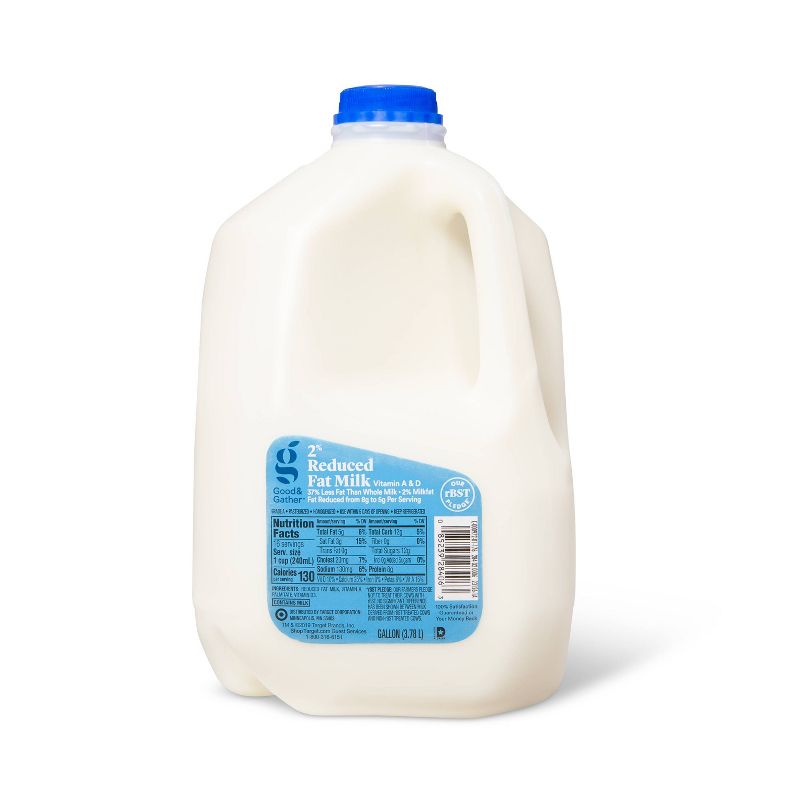
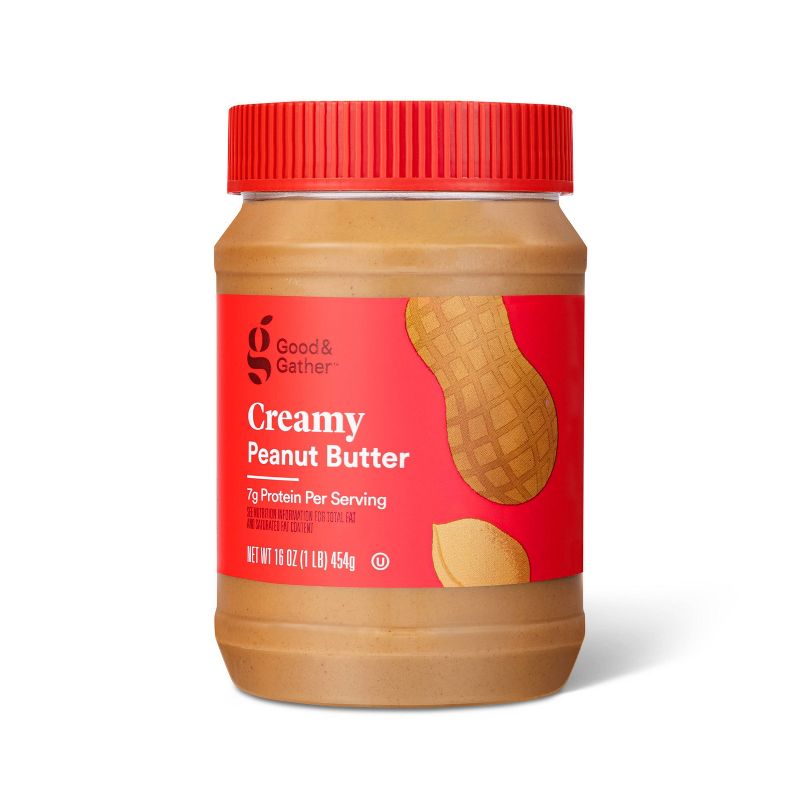
Product photos pulled directly from the real Target Product Details Scraper output for the two Good & Gather items compared above, captured September 17, 2026.
Does Target Circle’s 5% Discount Beat Walmart’s Prices?
The Target Circle Card discounts nearly everything by 5% at checkout. Walmart+ doesn’t offer an equivalent blanket discount, though it does include free delivery above a minimum order and other perks. On its own, 5% usually isn’t enough to fully close Walmart’s everyday-price advantage. But stacked with a sale price or a Circle-exclusive offer, Target’s checkout total can come in lower than Walmart’s shelf price on that specific item. The discount matters most on a targeted trip, not a full weekly grocery run.
We ran the numbers on our own data: applying the 5% to Target’s prices in the store-brand table (before tax) flips four more items to Target, namely peanut butter, paper towels, frozen mixed vegetables, and salted butter. Walmart still comes out ahead on most of the rest.
Does Target Price Match Walmart?
No. Target’s price-match policy only covers Target’s own prices: Target.com, the Target app, and Target’s local ad. It no longer matches outside competitors at all, Walmart included. If a product is cheaper at Walmart, Target’s price-match program won’t apply that price at checkout.
Which Store Should You Choose?
- Choose Walmart if you want the lowest price with minimal planning: a large grocery run, generic products, everyday household necessities, or shopping for a bigger household where the per-item savings add up fast.
- Choose Target if you already use Circle promotions and the 5% discount, are buying sale items or Target-owned brands, or value combining groceries with clothing, beauty, and home purchases in one trip.
- For most households, the most economical approach is Walmart for recurring staples and Target for well-discounted promotional buys.
Why Businesses Track Walmart vs. Target Prices
Beyond individual shoppers, retail analysts, brand teams, and resellers rely on this same kind of price data to monitor MAP (Minimum Advertised Price, the lowest price a brand allows retailers to advertise) compliance, benchmark competitor pricing, and validate sourcing decisions before expanding into a new marketplace.
A European B2B holding company replaced its gut-feeling pricing decisions this way, scraping competitor prices weekly across its portfolio of resellers and feeding the results into a formula-based pricing model, a shift that contributed to an estimated 2-4% improvement in profit margins. The same pattern shows up at a smaller scale too.
A reseller deciding whether to source a product from Walmart or Target wants the same day-over-day price comparison this article builds, just running continuously instead of as a one-time check. A brand launching into a new region might track both retailers’ pricing on comparable SKUs for a few weeks before setting its own list price.
We built this comparison using Octoparse’s ready-made Walmart and Target templates instead of writing a scraper from scratch: point one at a list of product URLs, run it, and get structured price data back in minutes. The same setup can run unattended on a schedule, which is what makes it useful for ongoing business tracking, not just a one-time check.
There are three ways to call these templates for repeatable, automated collection (the full walkthrough is in the “How I Collected This Data” section below):
- MCP: connect an AI agent (Claude, ChatGPT, etc.) directly to Octoparse’s MCP server and let it search, run, and export these templates as part of an agentic workflow, with no manual steps.
- API: call the same templates programmatically to plug price data straight into your own pipeline, dashboard, or scheduled job.
- Desktop: for a one-off check, or to build a fully custom task for fields the templates don’t cover.
Need something the templates don’t reach, like regional pricing at scale, cross-marketplace product matching, or fully managed delivery to your warehouse? Octoparse’s Competitor Price Monitoring data service builds and delivers a custom feed for teams that don’t want to maintain scrapers in-house.
How I Collected This Data: A Step-by-Step Guide You Can Replicate
Why Manual Price Checking Fails
When I tried checking 70+ prices across Walmart and Target by hand, it fell apart fast: it took hours, prices changed without notice, and cross-checking every blank or odd-looking result against the live page ate up even more time. That’s exactly why I moved to automated collection, whether through a ready-made template or a custom-built task.
Method 1: Ready-Made Templates
Before building anything from scratch, check whether a ready-made Octoparse template already covers what you need. For Walmart and Target price tracking, it does. These are pre-built, maintained scrapers you can run in a few clicks, no field mapping required.
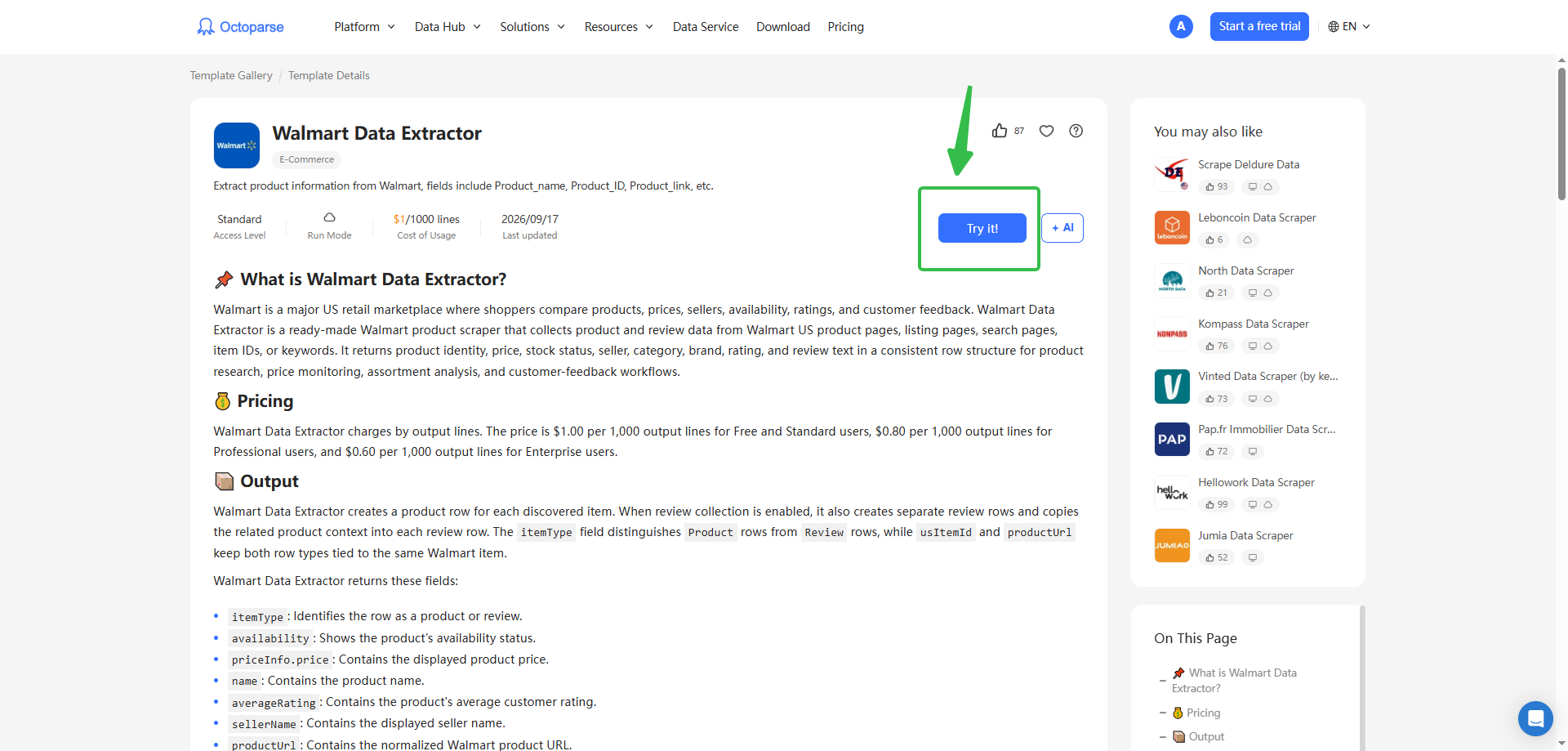
Walmart: Walmart Data Extractor
Walmart Data Extractor takes a list of Walmart product URLs or item IDs (or search keywords) and returns 13 fields per product (name, price, availability, brand, category, seller, rating) plus an optional review-collection toggle. It runs in Octoparse Cloud, priced at $1.00 per 1,000 output rows for Free/Standard plans, down to $0.60 for Enterprise. See a real test run against live Walmart listings for a sense of what the output looks like.
Target: Target Product Details Scraper
Target Product Details Scraper takes a list of Target product URLs and returns product name, description, price, unit price, category, and images, free to use. It matches the same “specific product, tracked over time” approach as the Walmart template above, which makes the two easy to run side by side.
How to Use These Templates
The fastest way to run either template is through Octoparse’s MCP server (Model Context Protocol, a standard that lets an AI assistant call tools directly): connect an AI client like Claude or ChatGPT to Octoparse’s MCP server, and it can find the template, fill in your URLs, run the task, and export the results in one conversation, with no manual clicking.
- Connect your AI client to Octoparse’s MCP server (one-time setup).
- Ask it to run Walmart Data Extractor with your product URLs or item IDs (plus optional search keywords), or Target Product Details Scraper with your Target product URLs.
- Have it export the results once the run finishes.
Prefer to call it yourself? Both templates also expose a REST API (executeTask / getTaskStatus / exportData) for scripting into your own pipeline.
Or skip the API entirely: click Try it! on the template page, paste in your URLs, and run it manually. Walmart Data Extractor runs in Octoparse Cloud only, while the Target detail template can run in Cloud or Desktop.
Method 2: Build a Fully Custom Scraper
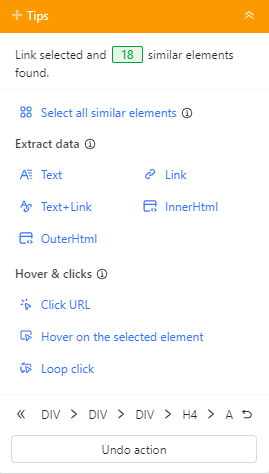
If you need a field the templates don’t cover, such as Target Circle offer text or store-pickup availability, build a Custom Task in Octoparse Desktop’s Custom Task builder (point-and-click field selection, formerly called Advanced Mode, no code required). The general workflow looks like this:
- open a product page.
- select the fields you want to extract.
- set up a loop over your list of URLs.
- add a timestamp field, then schedule the task to run in Octoparse Cloud on a recurring basis.
Method 3: Automate It with the Octoparse API
Once that Custom Task exists in your account, you can trigger it from your own code instead of clicking Run in Desktop. This uses the same Open Platform API as the ready-made templates, but a different flow: find the task, start it in the cloud, then pull the results once it finishes.
This path needs a Standard, Professional, or Enterprise Octoparse account; Free and Basic plans don’t include direct API access. Starting or stopping a cloud task specifically requires Professional or Enterprise. (Method 1’s MCP path is more permissive: Free and Basic accounts get a monthly free-record allowance there.) See the full API reference for authentication, rate limits, and every endpoint.
Comparing Your Collected Data
STEP 1: Export Both Datasets
- Export Walmart data: Excel/CSV
- Export Target data: Same format
- Ensure both have identical column headers
STEP 2: Create Comparison Spreadsheet
Sample Structure:
Formulas:
- Difference:
=E2-C2(Target – Walmart, positive means Walmart is cheaper) - % Difference:
=(E2-C2)/E2*100 - Winner:
=IF(C2<E2,"Walmart","Target")
STEP 3: Analyze Over Time
- After 2-4 weeks of daily collection, create line graphs showing price trends
- Identify: Which products have stable prices vs. frequent fluctuations
- Spot patterns: Weekly sales cycles, seasonal changes
Legal & Ethical Checklist Before You Start
Before scraping, ensure:
- ☑ Personal Use Only: Not using data for commercial resale
- ☑ Robots.txt Compliant: Octoparse respects these rules automatically
- ☑ Rate Limiting Enabled: 3-5 second delays configured
- ☑ Off-Peak Scheduling: Running during low-traffic hours
- ☑ No Authentication Bypass: Not scraping behind login walls
- ☑ Terms Reviewed: Familiar with Walmart/Target ToS (for awareness, not legal advice)
Disclaimer: This guide is for educational purposes. Web scraping legality varies by jurisdiction and use case. When in doubt, consult a legal professional. Use scraped data responsibly and ethically.
FAQs About Walmart vs. Target Prices
- How do I know if my price tracking data is accurate?
Accuracy depends on three factors: temporal consistency (collecting at the same time daily), geographic consistency (setting your ZIP code before scraping), and product matching (comparing identical brands and sizes). For this comparison, I cross-checked every price that came back blank or looked off against the live product page rather than trusting it at face value, and I noted it in the table whenever a size, formula, or stock status wasn’t an exact match instead of treating a close match as identical. Pro tip: Always include timestamps and collect at consistent intervals for the most reliable trend analysis.
- Is Walmart cheaper than Target for groceries?
In our testing, yes: at regular, non-promotional prices, Walmart was cheaper on most grocery and household staples, especially store-brand items (Great Value vs. Good & Gather). The gap narrows on national-brand products and can flip in Target’s favor when a Circle discount stacks with a sale price.
- Does Target Circle’s 5% discount beat Walmart’s prices?
Not on its own for a typical cart. Walmart’s everyday-low-price advantage is usually bigger than 5%. But stacked with a Circle-exclusive offer or a sale price on a specific item, Target’s checkout total can come in lower than Walmart’s shelf price for that item.
- How do Great Value and Good & Gather store-brand prices compare?
Across the products we compared directly (milk, peanut butter, paper towels, bananas, and laundry detergent), Great Value came out cheaper than Good & Gather every time, usually by a small margin of a few cents to around a dollar. Good & Gather is often rated higher on quality in categories like dairy and prepared foods, so the better pick depends on whether price or quality matters more for that item.
- Is Walmart+ or Target Circle worth it?
It depends on how you shop. Target Circle is free and gives a straightforward discount on most purchases, which is the more direct price saving. Walmart+ is a paid membership, reported at $98 per year or $12.95 per month (Walmart’s own pricing page returned a bot-check during our research, so treat this figure as secondary-sourced rather than pulled directly from Walmart), built around free delivery, a fuel discount, and other perks rather than a blanket discount on every item. It tends to pay off more for shoppers who value the delivery and shipping benefits than for people optimizing purely for the lowest sticker price.
- Can you track Walmart and Target prices automatically?
Yes. The Walmart Data Extractor and Target Product Details Scraper templates covered earlier in this article can run on a recurring schedule in Octoparse Cloud, and can be called through MCP, the API, or Octoparse Desktop, so you don’t have to re-check prices by hand every day.
- Is it legal to scrape Walmart and Target prices?
Scraping publicly available prices from Walmart.com and Target.com without logging in is generally lower-risk, but legality depends on your jurisdiction, how you use the data, and each site’s terms of service. See the full legal and ethical checklist and the deeper legality discussion earlier in this article.