

A YouTube comment scraper collects publicly visible comments and turns them into structured rows for analysis. The quickest option is Octoparse’s ready-made YouTube Details & Comments Scraper. Developers can automate the same type of workflow with the Octoparse AgentTools API or use the official YouTube Data API. Octoparse Desktop is the better route when the page workflow needs customization.
Want to export all comments from a YouTube video? This guide compares four practical ways to collect YouTube comments, with and without coding.
You’ll learn how to quickly download YouTube comment data for sentiment analysis, research, or machine learning, no scraping experience required. Need the video file itself rather than its comments? Use the free YouTube downloader.
YouTube Comment Scraper Methods Compared
| Method | Best for | Coding required | Typical output |
| Octoparse online template | Fast, no-code exports from known video URLs | No | Structured rows that can be exported in supported formats |
| Octoparse AgentTools API | Repeatable jobs connected to an app or data pipeline | Yes | Task status, preview data, and an export file |
| Octoparse Desktop | Custom fields and page interactions | No, for most workflows | Configurable table output |
| YouTube Data API | Teams that prefer Google’s official developer interface | Yes | JSON comment-thread resources |
No method can guarantee a permanent copy of every comment ever posted. Hidden, deleted, private, disabled, moderated, or otherwise unavailable comments may not appear. Treat every export as a snapshot of the public data exposed when the collection runs.
What Does a YouTube Comment Scraper Export?
A YouTube comment scraper normally exports one row per visible comment, often with the author, comment text, publication date, and like count. The exact fields depend on the tool and what YouTube exposes on the page or through an API.
As of August 10, 2026, the published https://www.octoparse.com/template/youtube-details-comments-scraper lists these fields:
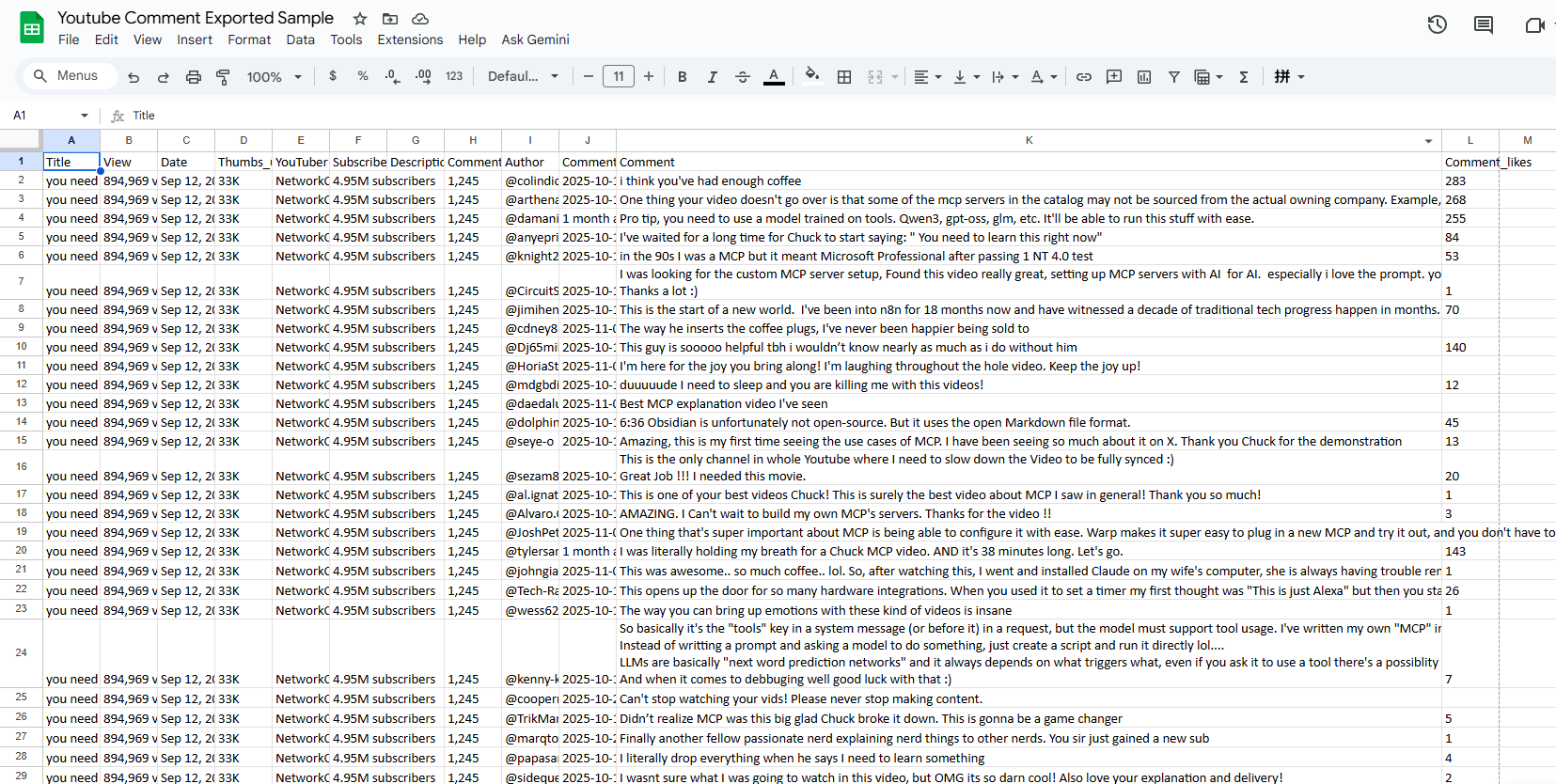
TitleViewDateThumbs_upYouTuberSubscribersDescriptionComment_countAuthorComment_dateCommentComment_likes
A listed field can still be empty. YouTube may not display the value for a particular video, market, page state, or request. Validate a representative sample of videos before scaling the collection.
4 Ways to Scrape and Export YouTube Comments
With the available fields and limitations in mind, the next step is choosing how to collect the data. Use the online template for quick exports, AgentTools for application automation, Octoparse Desktop for custom extraction logic, or the YouTube Data API when your team prefers Google’s official developer ecosystem.
Method 1: Export YouTube Comments Online

Octoparse’s YouTube comment scraper supports batch input for multiple YouTube video URLs. Check the live template page for the current URL and task limits before starting a large run.
You don’t need to download anything. Just try the YouTube details and comments scraper directly by entering the youtube URL.
Here I tested one viral youtube video with 456 comments on it:

What I love about Octoparse’s online template is that it contains a rich set of data types that I can analyze from the youtube video, such as how many likes one comment has, who left the comment, the date, and etc.
It can also export the comments nicely into spreadsheet:
Well, no more needed to be said here, it’s free and you don’t need to download anything. If you want to see what more it can do, feel free try it yourself:
https://www.octoparse.com/template/youtube-details-comments-scraper
The online template is ideal for manual or occasional exports. If the same collection needs to run from an application or data pipeline, AgentTools provides the automation layer.
Method 2: Automate YouTube Comment Collection With AgentTools
The Octoparse AgentTools API is designed for automated workflows that need to find a supported template, create a cloud extraction task, monitor it, and export the result. Use this route when comment collection must run from an application rather than through a browser form.
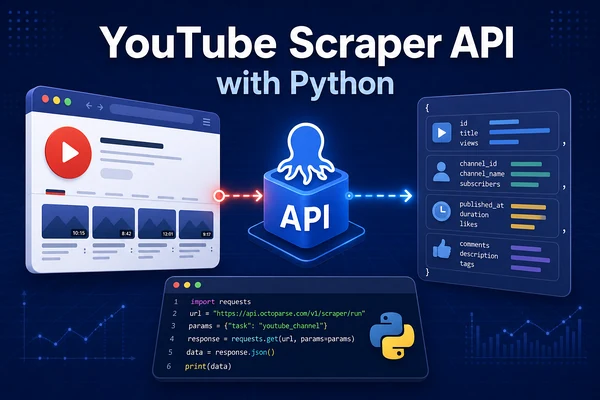
For a tested Python implementation of this task lifecycle using YouTube channel data, follow this YouTube scraper API Python guide.
The official AgentTools workflow for a new task is:
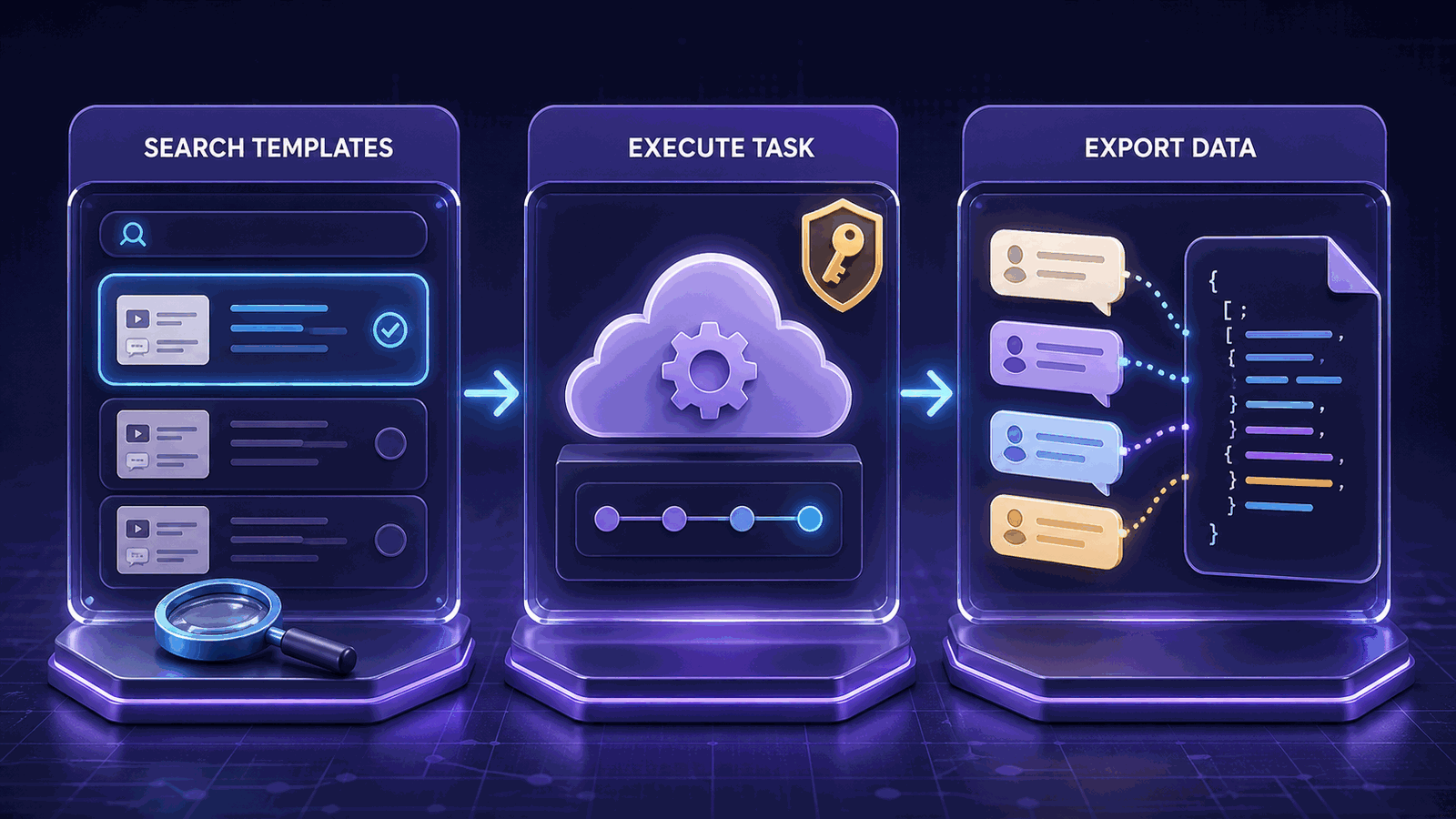
Step 1. Resolve the exact supported template
Call searchTemplates with a narrow YouTube-comments query. Select recommendedTemplateName when the response provides one. Do not assume the first item is the right template.
Before creating a task, record the exact template slug, execution mode, inputSchema, sourceTree, and outputSchema. A public template page does not replace this check because API support and parameter names must come from the current API response.
Step 2. Build parameters from the returned schema
Use each inputSchema[].field value as the parameter key. Preserve array fields as arrays, even for one URL. For a source-backed field, submit the option key rather than its display label.
AgentTools expects parameters to contain a JSON object serialized once as a string. Sending a nested object directly is a common integration error.
Step 3. Create one cloud task
Send the API key in x-api-key. The executeTask request also needs a stable x-external-user-id. Keep both values in environment variables or a secrets manager. Do not print them or commit them to a repository.
Create the task once. An ambiguous timeout does not prove the request failed, so an automatic retry could create a duplicate task. Reconcile the task state before any second creation attempt.
Step 4. Poll export status serially
An accepted response means task creation and cloud start were accepted. It does not mean the export file is ready.
Call exportData serially and follow the response’s retryGuidance. Handle the documented states explicitly:
AgentTools Export Statuses
| Status | Meaning | Next action |
collecting | Extraction is still running | Wait for the advised interval |
exporting | The export file is being prepared | Continue bounded polling |
exported | The file is ready | Read the URL and preview data |
no_data | The task finished without rows | Review the source and parameters |
failed | The task or export failed | Inspect the error and recovery guidance |
invalid | The request is not valid | Check the task ID and export options |
For a production executor, keep polling bounded and serial. A practical safety limit is 30 attempts or 15 minutes, while still respecting longer wait guidance returned by the API.
This article does not publish a fixed-template script until the exact template response and a real execution have been verified. That prevents stale template IDs, invented fields, and examples that appear runnable but fail in practice.
AgentTools works best when a supported template already matches the task. When the page behavior or required fields need deeper customization, build the workflow in Octoparse Desktop.
Method 3: Scrape YouTube Comments With Octoparse
Octoparse’s online template is powerful, but they are merely one small part of what Octoparse can do. When you encounter different scenarios like IP blocks and so on, you might need a more comprehensive approach.
Step 1: Paste the YouTube URL to Octoparse
Before beginning, you need to download and install Octoparse on your device, and sign up for a free account.
Copy and paste your desired YouTube video URL in the search bar, and click on the Start button. Octoparse will load the page by auto-detecting.
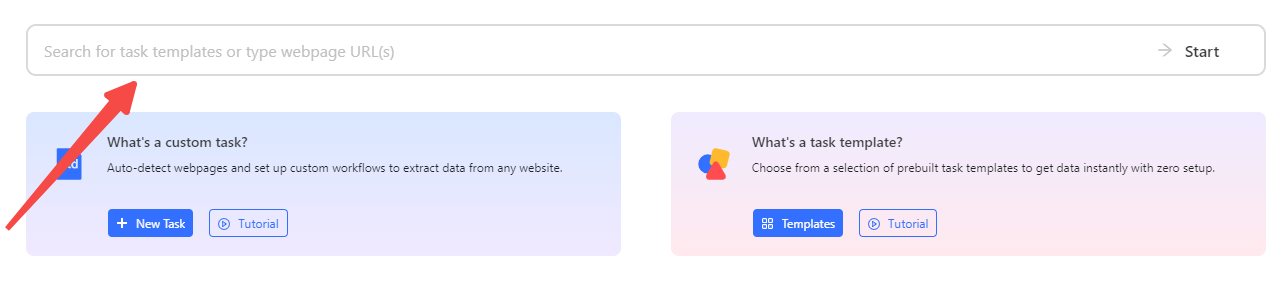
You can also search YouTube comments on the search bar and find the preset template from method 1.
Step 2: Customize YouTube comment scraping workflow
Octoparse will automatically create a YouTube comments crawler for you.
You can make changes with the Tips it given to check all data you want can be found in the preview table. You can quickly delete any fields that you do not wish to scrape or rename.
Step 3: Scrape YouTube comments and download
Click the Save button in the upper-right corner to save the task you created in Octoparse. After that, hit the Run button and wait until Octoparse finishes its job. You can download the scraped YouTube comments in your desired format.
You can also scrape other information from YouTube channel, reading this article: How to Build A YouTube Channel Crawler, or watching the video guide below to learn more details.
Video guide to scrape YouTube video info with Octoparse
A custom browser workflow provides control over the visible page. Teams that prefer an official resource model can instead retrieve comment threads through the YouTube Data API.
Method 4: Use the Official YouTube API
The official YouTube Data API is the developer route for retrieving comment threads associated with a video or channel. It requires a Google Cloud project, API credentials, quota management, and pagination code.
Google’s commentThreads.list method costs one quota unit per call. A request can return up to 100 items, and nextPageToken identifies the next page when more results are available.
A basic request uses:
Continue until the response no longer returns nextPageToken. Do not assume that the replies embedded in a thread always represent every reply. If the project needs complete reply retrieval, inspect Google’s comment resource documentation and implement the relevant pagination path. The YouTube Data API is a strong choice when the team already operates inside Google Cloud and wants Google’s documented resource model. It adds credential, quota, and pagination work that a no-code template avoids.
Is It Legal to Scrape YouTube Comments
Scraping publicly visible YouTube comments may be permissible in some contexts, but legality depends on the jurisdiction, purpose, collection method, platform terms, and handling of personal data. Review YouTube’s Terms of Service and applicable privacy laws before collecting data. This article is not legal advice.
The U.S. Ninth Circuit’s 2022 hiQ Labs v. LinkedIn opinion addressed access to publicly available data under the Computer Fraud and Abuse Act, but it did not establish that all web scraping is legal. Platform terms, privacy rules, contracts, and local laws can still apply.
For a broader overview of the factors that affect legality, read our detailed guide:
The thing is, manually copying thousands of comments is just not practical. That’s why most people would use web scrapers to do so. You tell them what you need, and in minutes, all those comments are sitting in a tidy spreadsheet.
Why Can a YouTube Comment Export Be Incomplete?
A missing comment does not always mean the scraper failed. Check these conditions before changing tools:
- Comments are disabled: The video has no accessible comment section.
- The comment was deleted or moderated: A public export cannot recover unavailable content.
- The page returned a different state: Consent, age, region, login, or experiment states can change visible content.
- Replies need separate pagination: A top-level thread may not include every reply in one response.
- Dynamic loading stopped early: A browser workflow may not have loaded the full visible set.
- The job used duplicate or invalid URLs: Input quality can create empty or repeated results.
- The source changed: YouTube can update markup, behavior, or API responses.
Document the collection date, method, input URLs, and known exclusions. That makes the dataset reproducible and prevents a snapshot from being described as a permanent archive.
What Can You Do With Exported YouTube Comments?
Structured comments are useful when the analysis has a defined decision behind it.
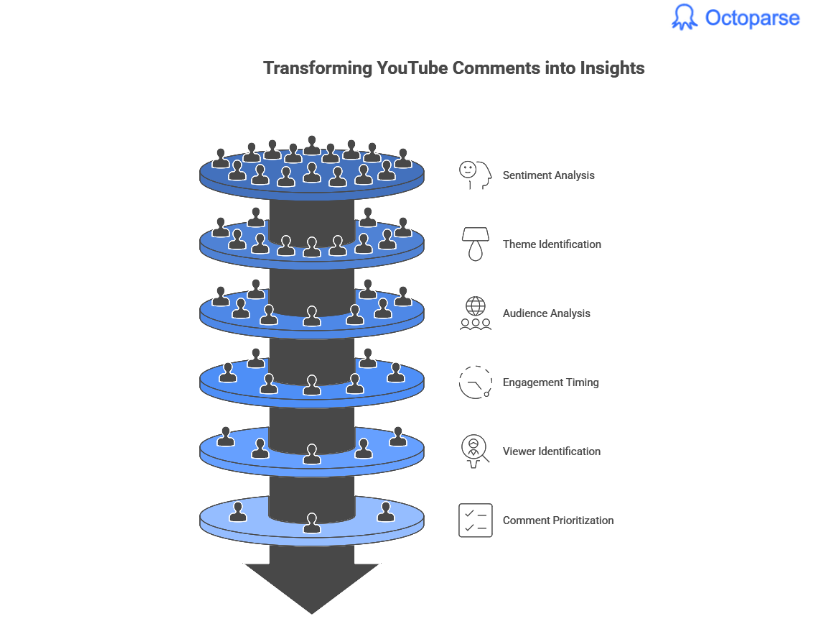
- Audience research: Group repeated questions, objections, and requested topics.
- Sentiment review: Classify positive, negative, and neutral feedback, then manually inspect a sample.
- Content planning: Identify unanswered questions that deserve a video, FAQ, or support article.
- Competitor research: Compare public feedback themes across videos without treating commenters as a representative market sample.
- Community operations: Prioritize questions and complaints that need a response.
- Model development: Build a labeled text dataset only after addressing consent, privacy, bias, and retention requirements.
Do not turn illustrative percentages into conclusions unless the measurement method is documented. Commenters are self-selected, and their views may not represent all viewers or customers.
Which YouTube Comment Scraper Method Should You Choose?
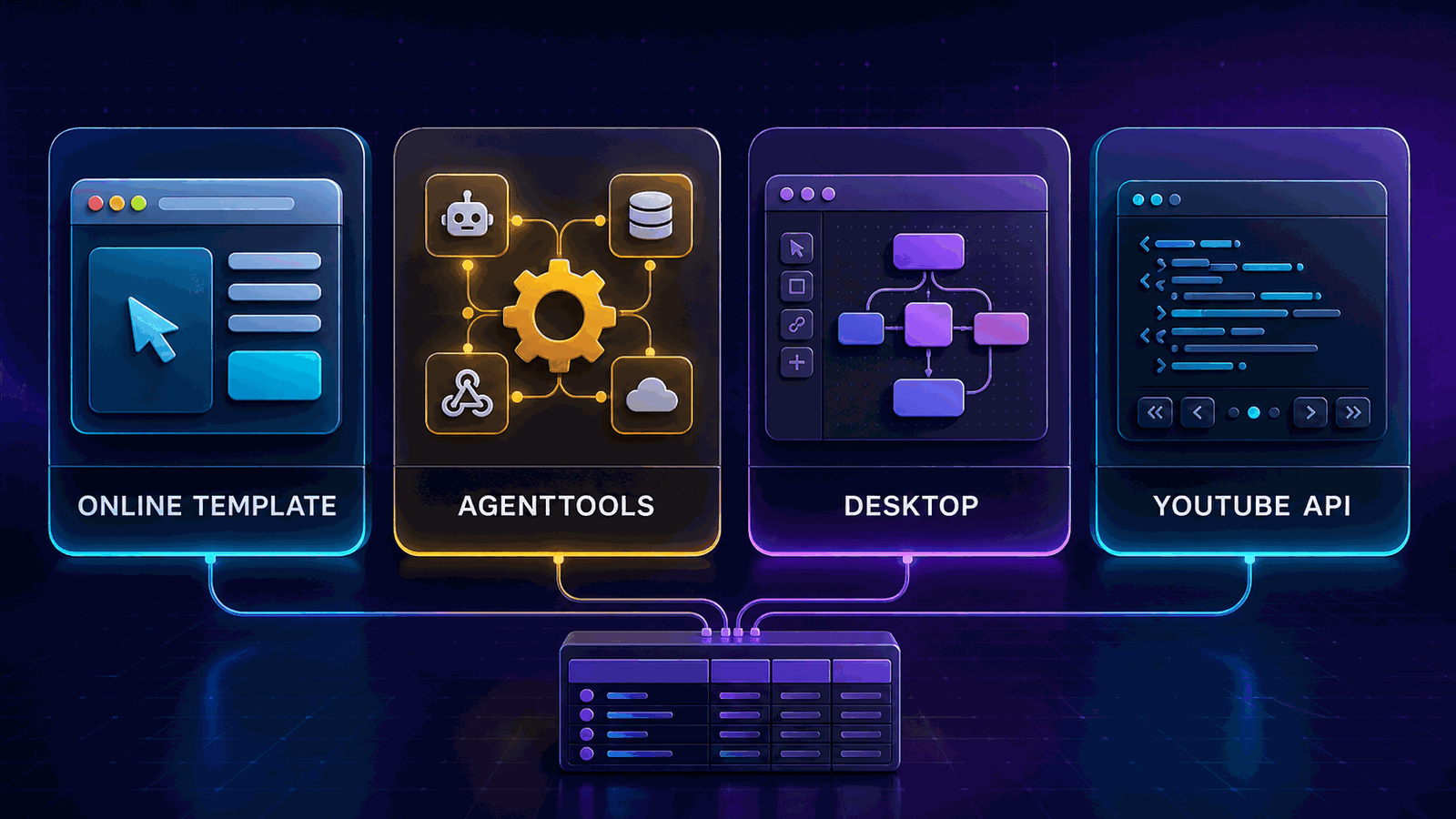
Choose the Octoparse online template for the fastest no-code export from known video URLs. Choose AgentTools when a verified template must run from an application or scheduled data pipeline. Choose Octoparse Desktop when you need custom page logic. Choose the YouTube Data API when the team prefers Google’s official developer interface and can manage credentials and pagination.
Start with one representative video. Validate the fields and missing-data behavior. Scale only after the sample supports the decision you want to make.
FAQs
- Can I export YouTube comments to Excel?
Yes. A YouTube comment scraper can collect publicly visible comments into structured rows and export them in a spreadsheet-compatible format. With Octoparse, the exact export options depend on the environment and plan. Check the sample rows before using the file for analysis.
- Do I need to code to scrape YouTube comments?
No. A ready-made Octoparse template accepts YouTube video URLs and returns structured records without requiring scraping code. Coding is useful when you need AgentTools automation, the official YouTube Data API, or custom downstream processing.
- Can a scraper export every comment and reply?
No tool should promise access to comments that YouTube does not expose. Deleted, hidden, private, disabled, moderated, restricted, or unavailable comments may be missing. Replies can also require additional loading or pagination. Describe the result as a dated public snapshot.
- What fields should I collect from YouTube comments?
Start with video identity, author, comment text, comment date, and like count. Add replies or video metadata only when they answer a defined research question. Smaller schemas are easier to validate, protect, and analyze.
- Is the Octoparse YouTube comments template free?
As verified on August 10, 2026, the template page identifies the YouTube Details & Comments Scraper as free to use. Account-plan, cloud-resource, and task limits may still apply, so verify the current template page before a large job.
- How does the AgentTools API export YouTube comments?
AgentTools first resolves a supported template, then creates a cloud task with executeTask, and finally monitors and exports the result through exportData. The live template response determines the valid parameter fields. An accepted task is not yet a completed export.
- Is the YouTube Data API better than web scraping?
The YouTube Data API offers an official resource model, documented parameters, and quota-based access. A scraper template reduces credential and pagination work and can provide a spreadsheet-ready workflow. The better choice depends on compliance requirements, engineering capacity, and required fields.
- How should I analyze YouTube comments responsibly?
Collect only necessary public fields, document the date and scope, remove or protect personal identifiers when possible, and avoid treating commenters as a representative sample of all viewers. Sensitive profiling or high-impact uses need additional legal, privacy, and research-ethics review.